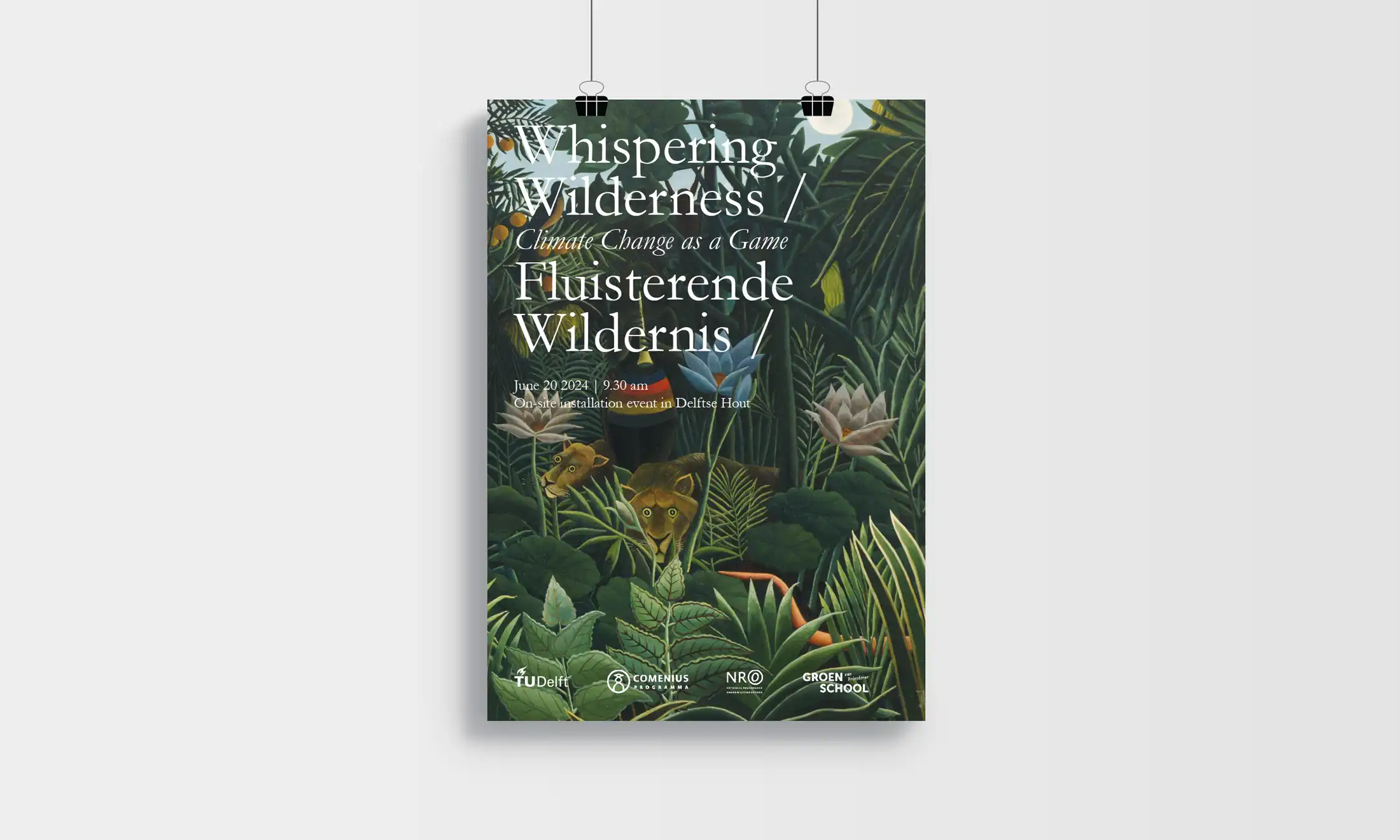
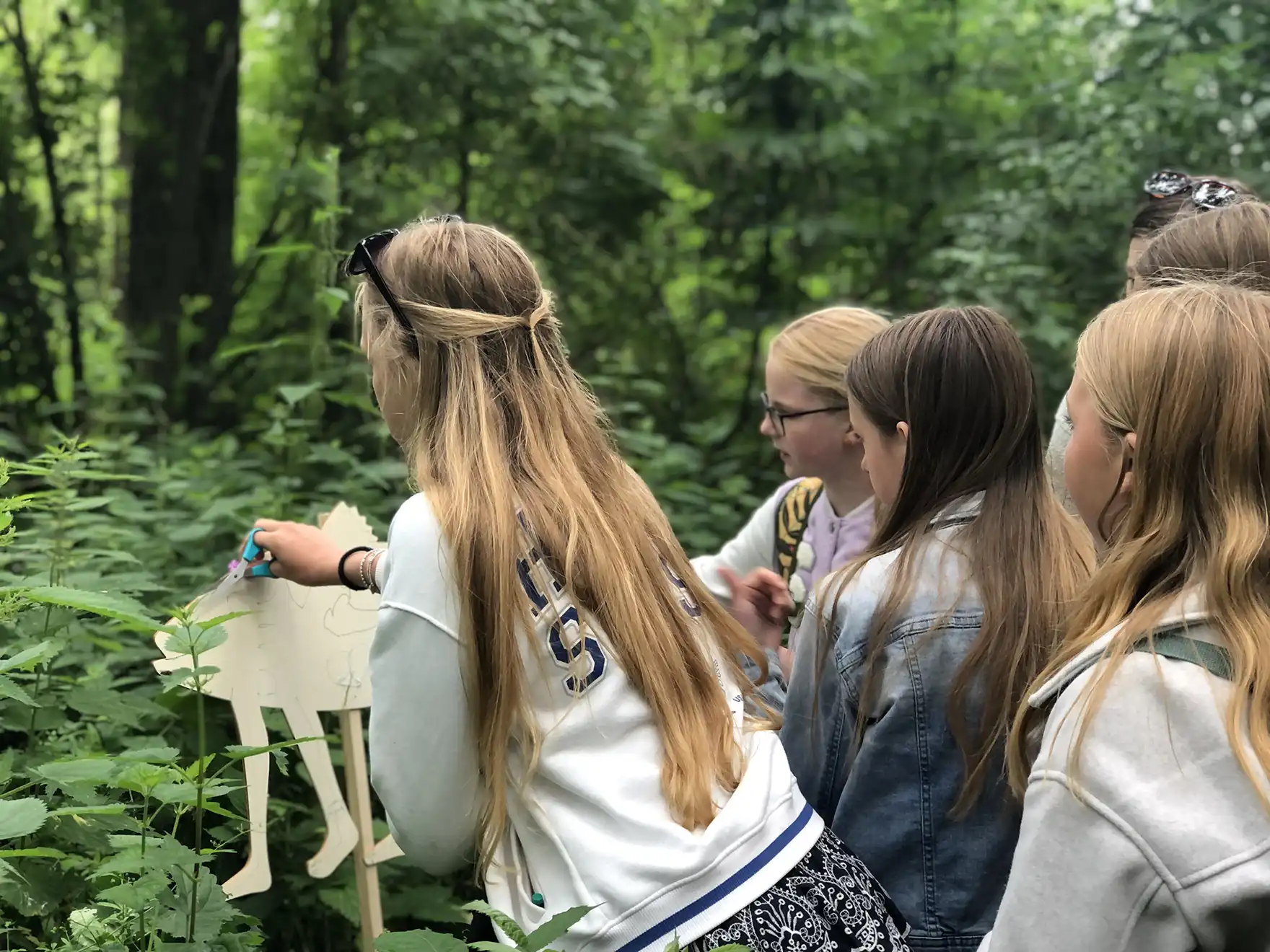
During the (Co)Creation phase, students and teachers, inspired by the second workshop with children, developed several installation designs through collaborative co-design sessions. Ultimately, they collectively selected one final installation to prototype and construct for the concluding event. This on-site installation day marks the end of the Comenius course ‘Climate Change as a Game’ for pedagogical innovation, which involved students from TU Delft’s landscape architecture, architecture, and urbanism programs, as well as a primary school class from the Groen van Prinstererschool.
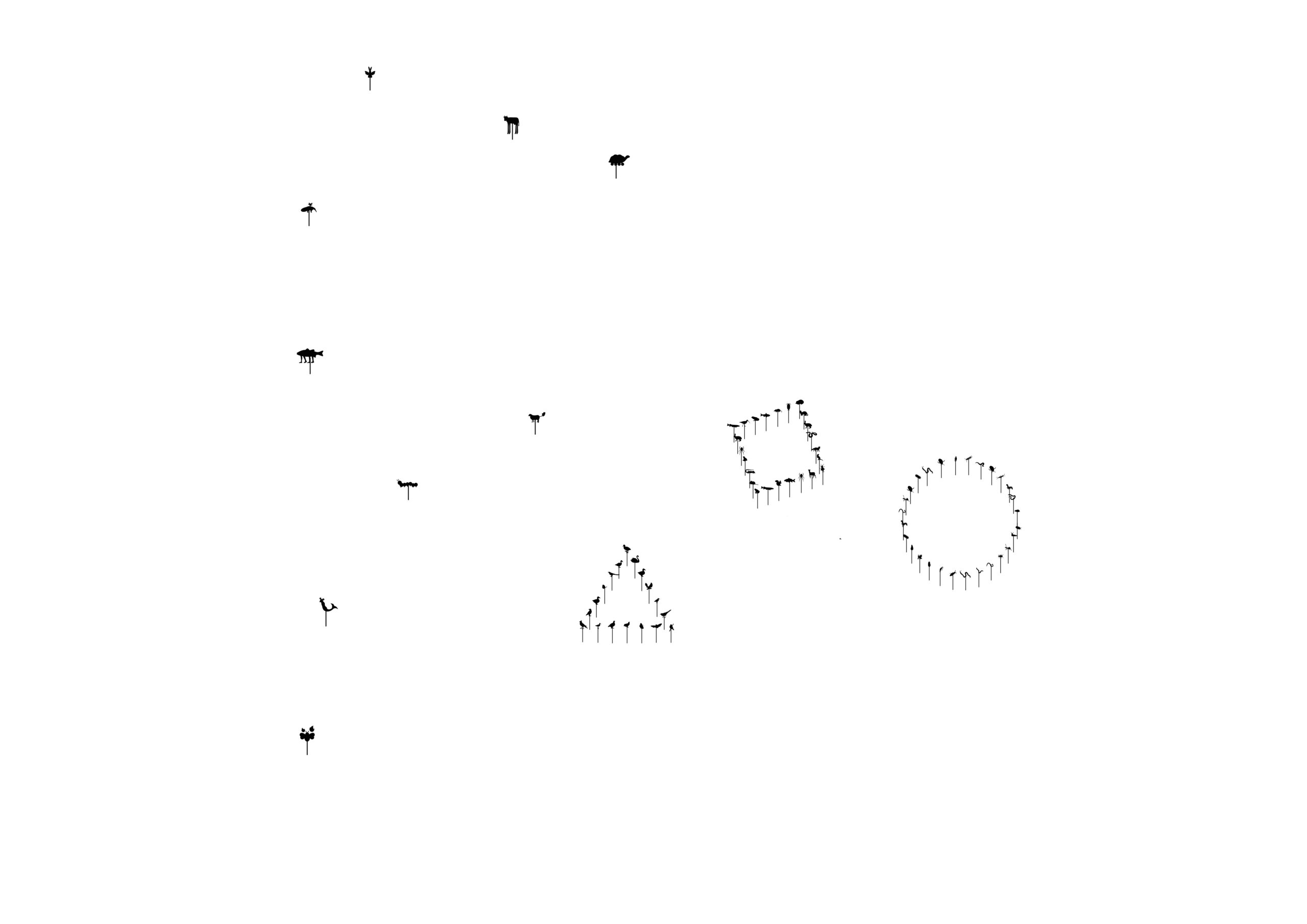
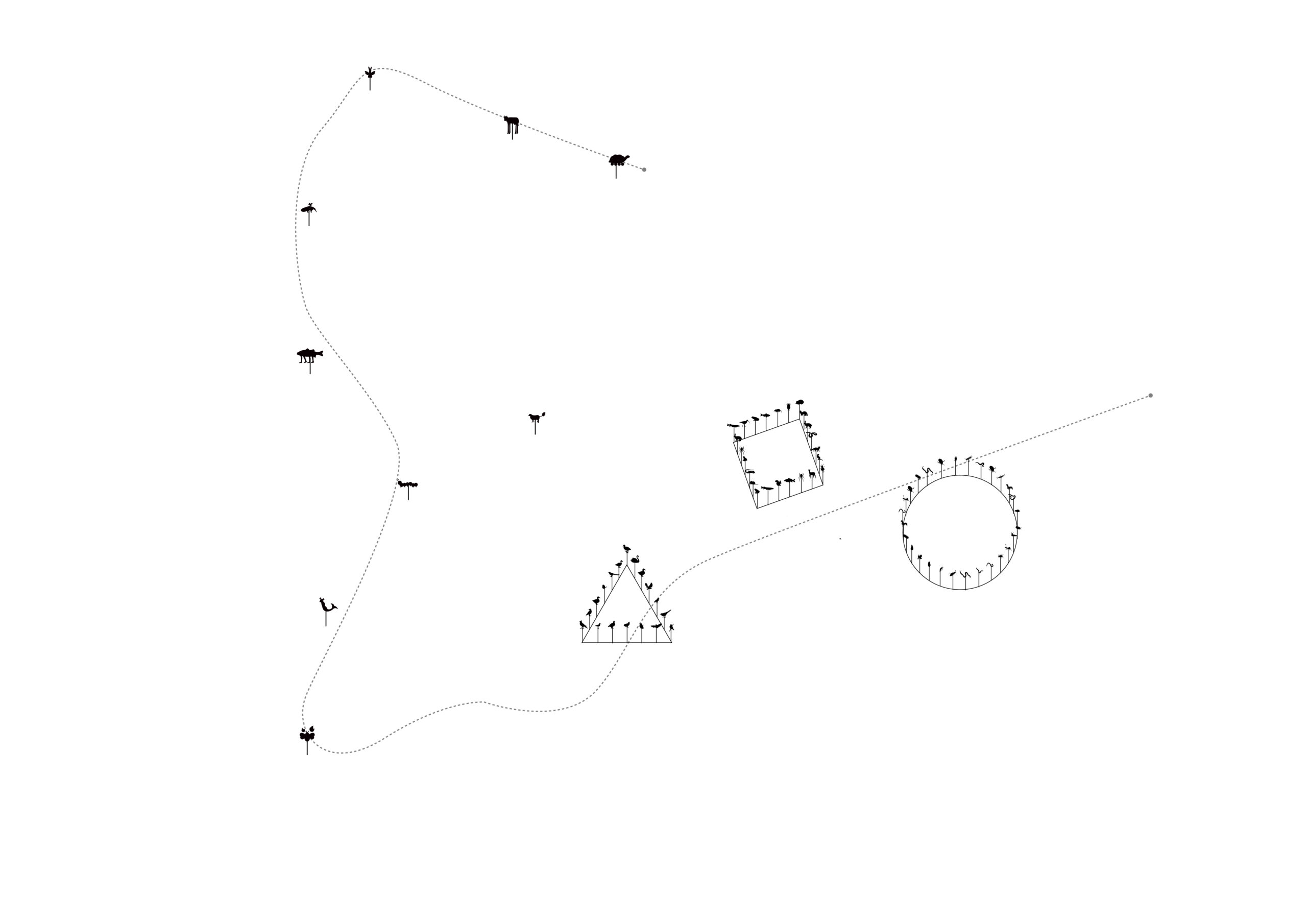
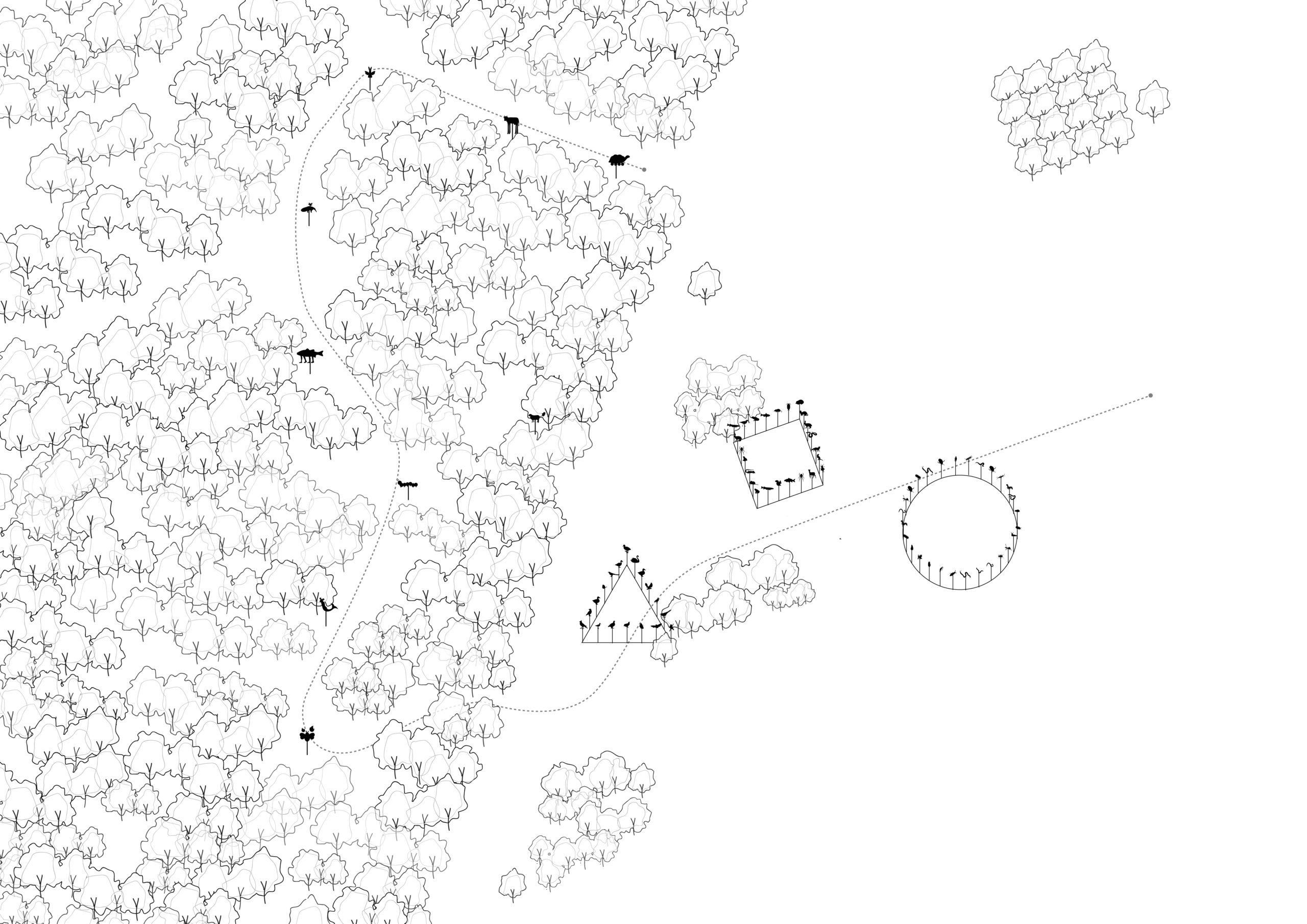
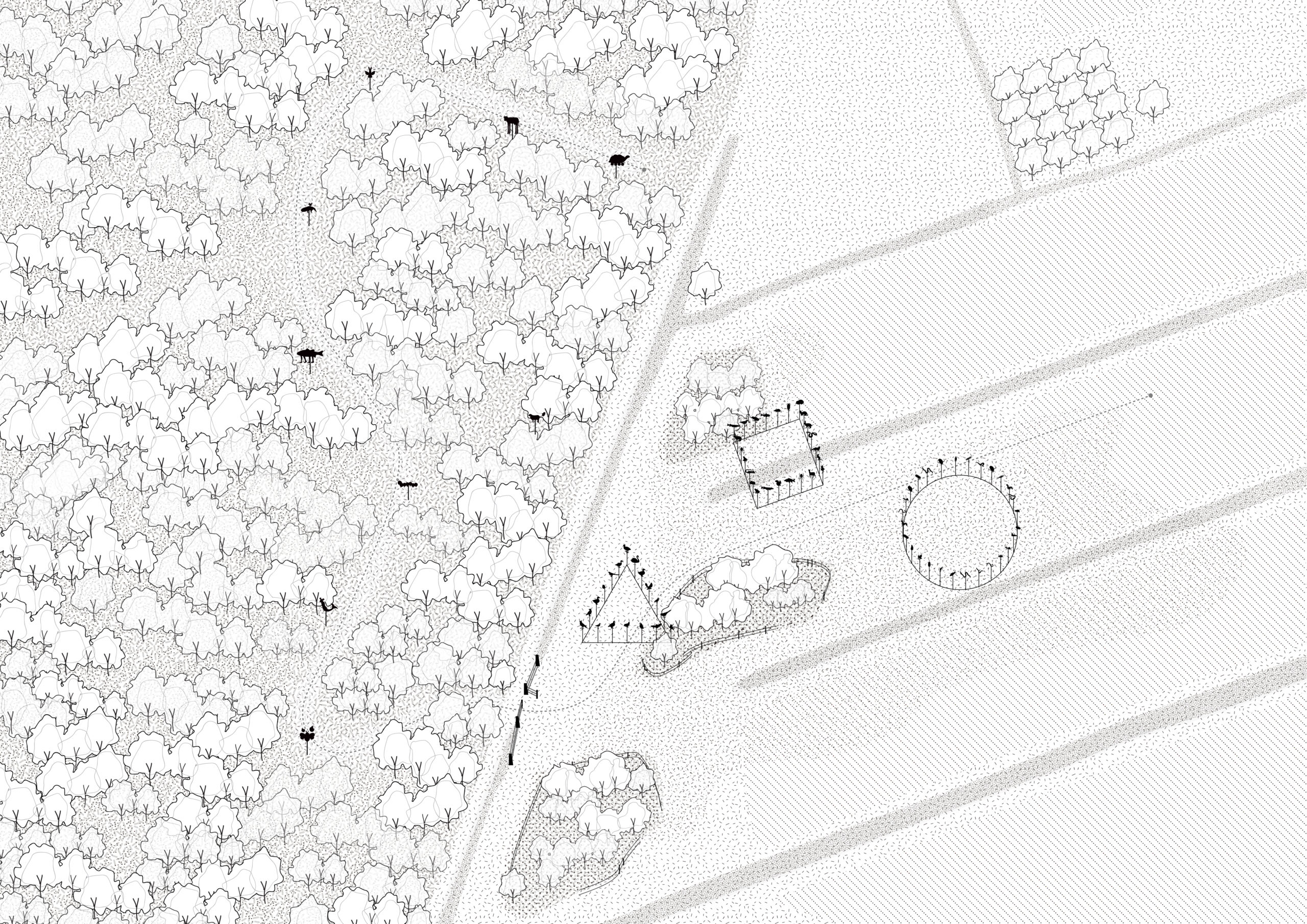
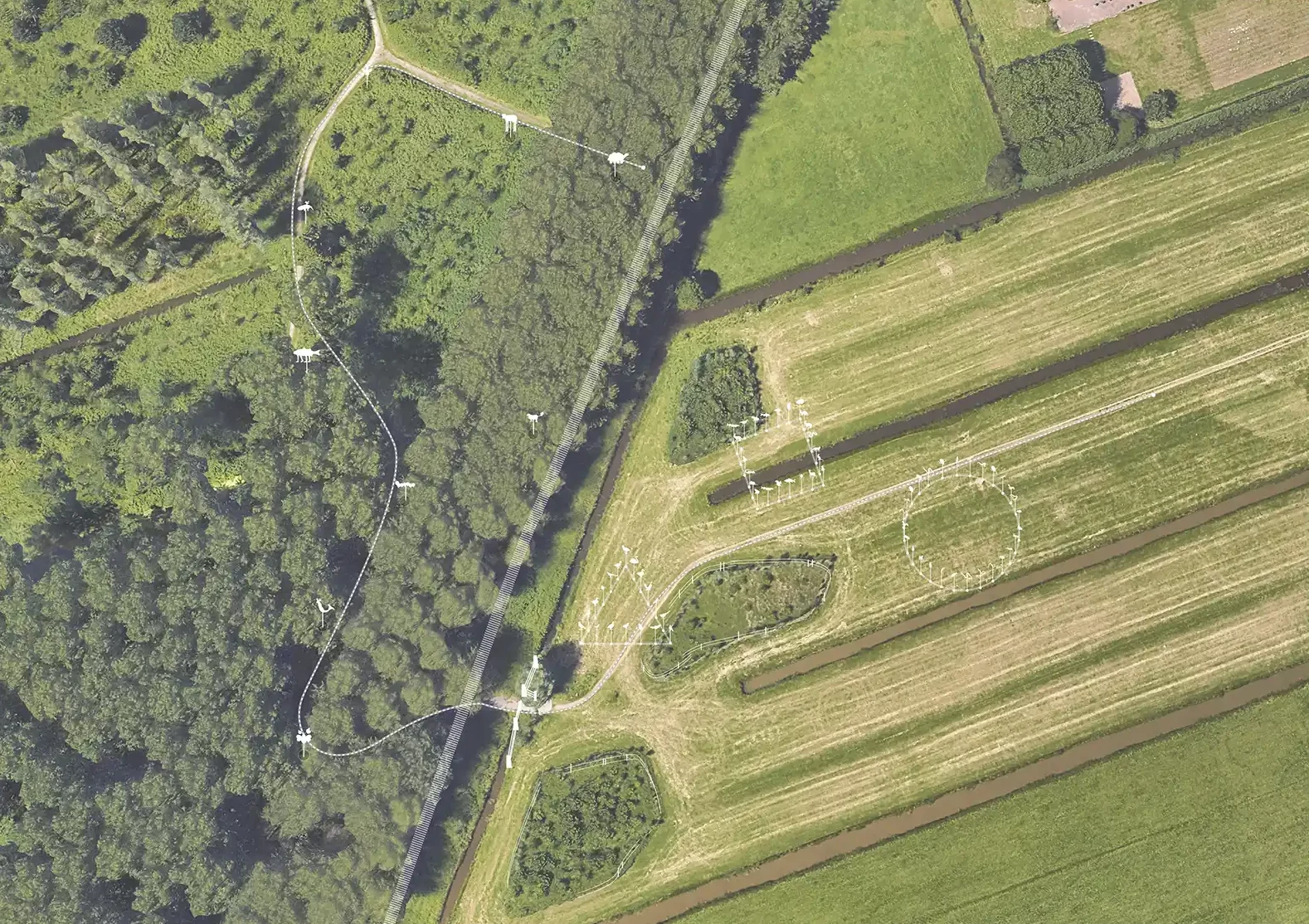
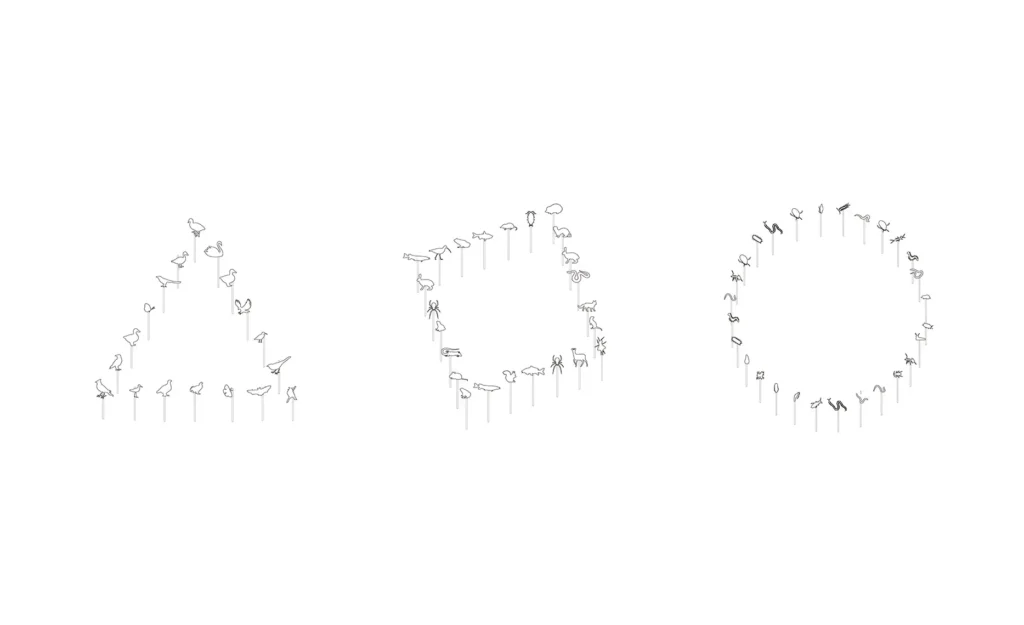
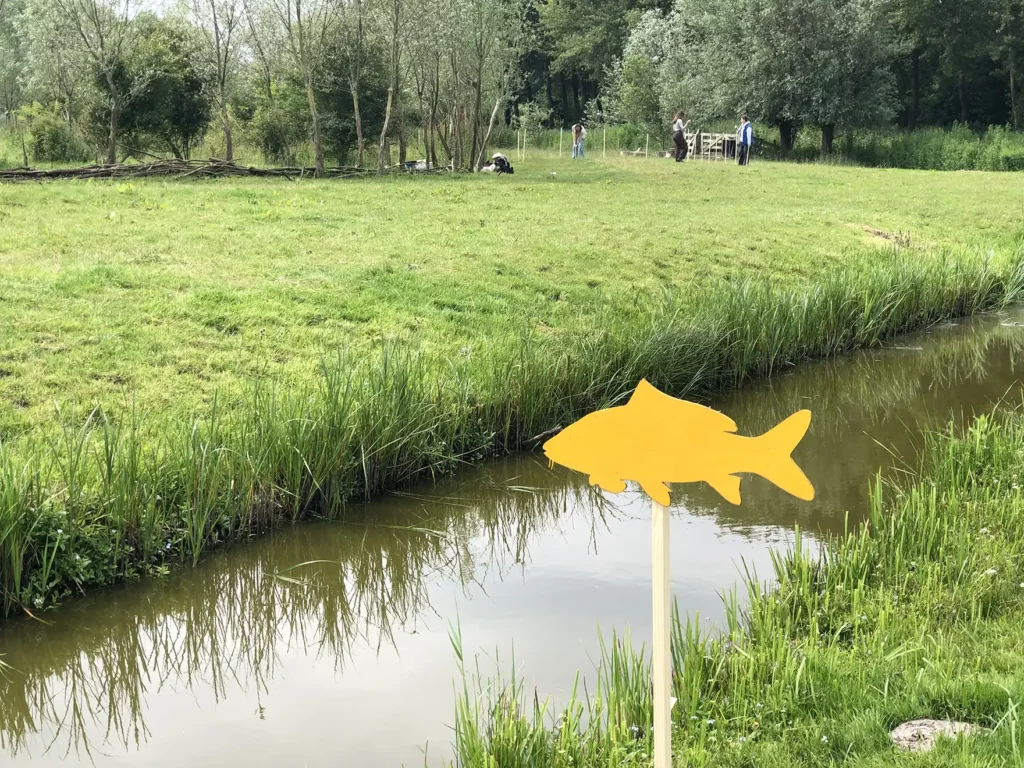
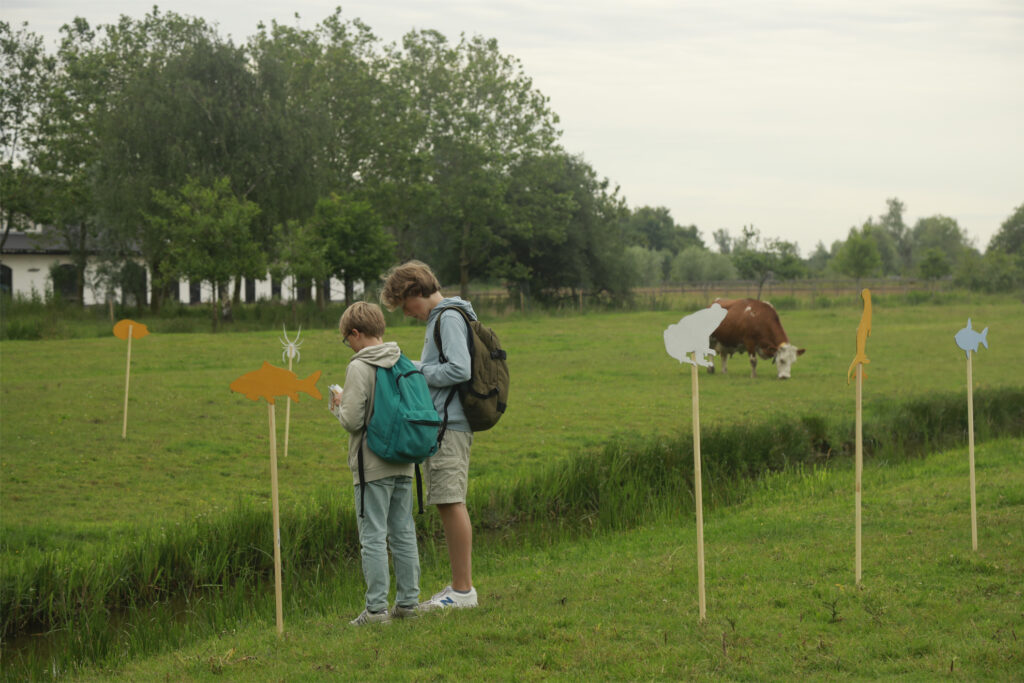
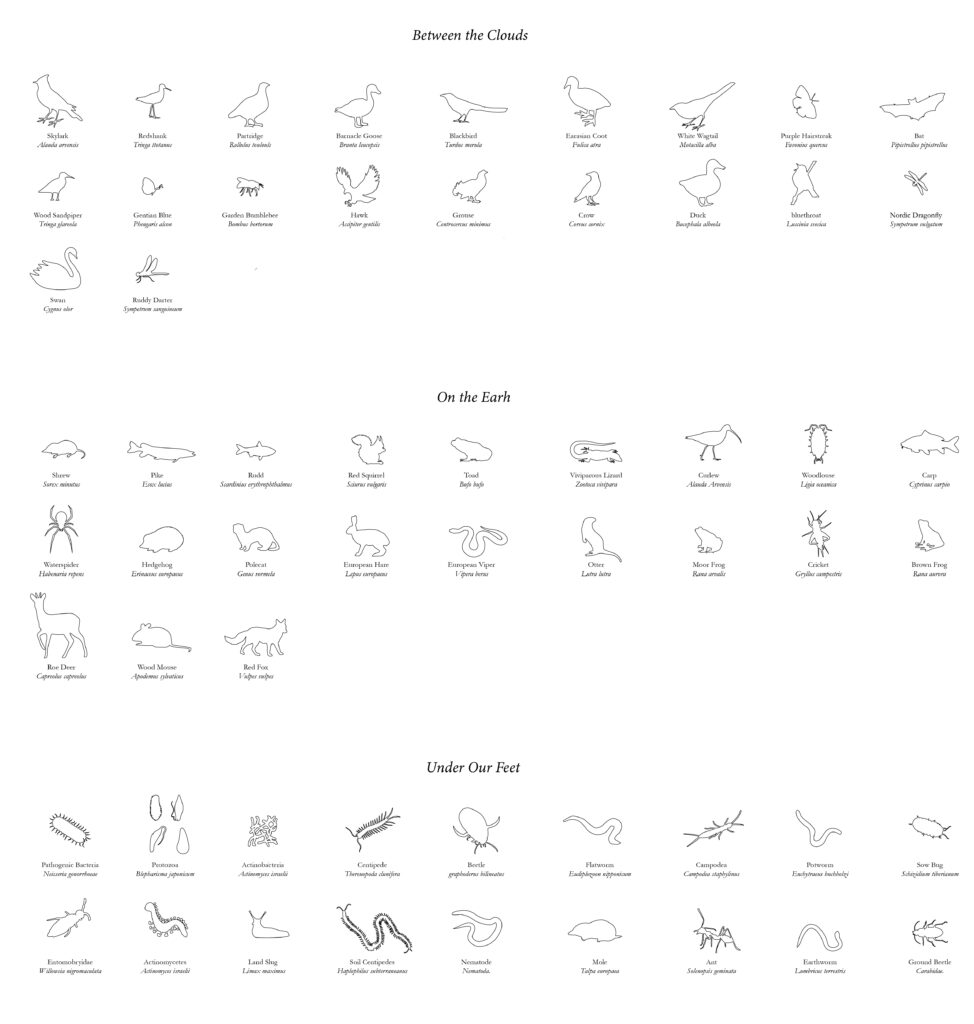
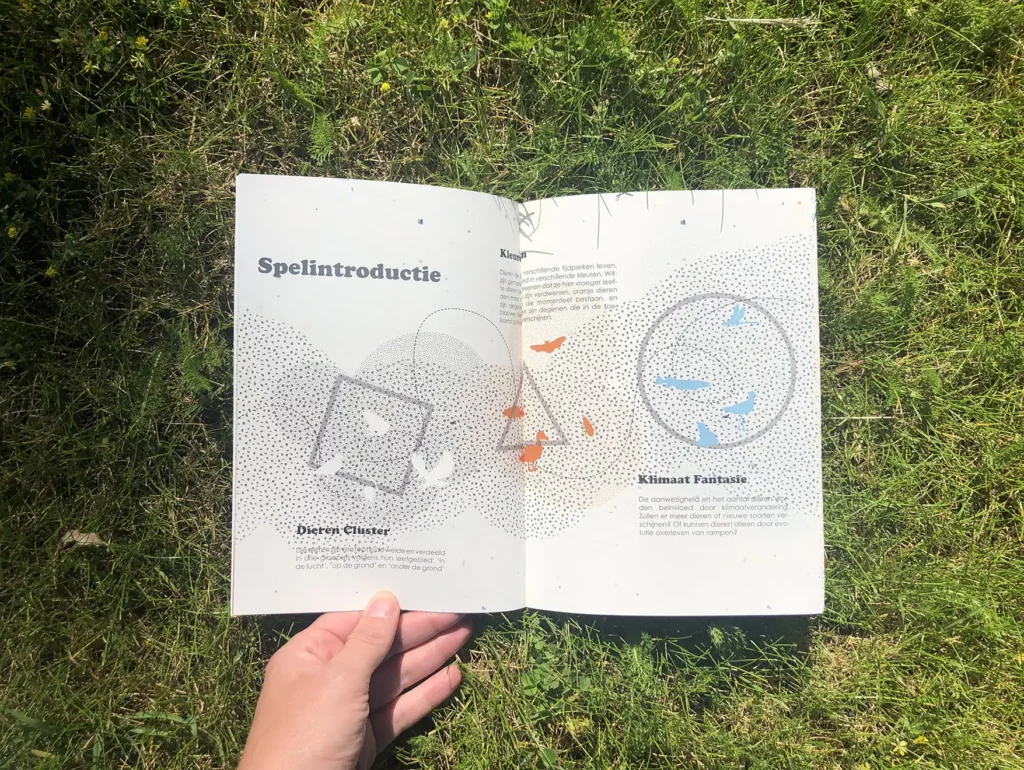
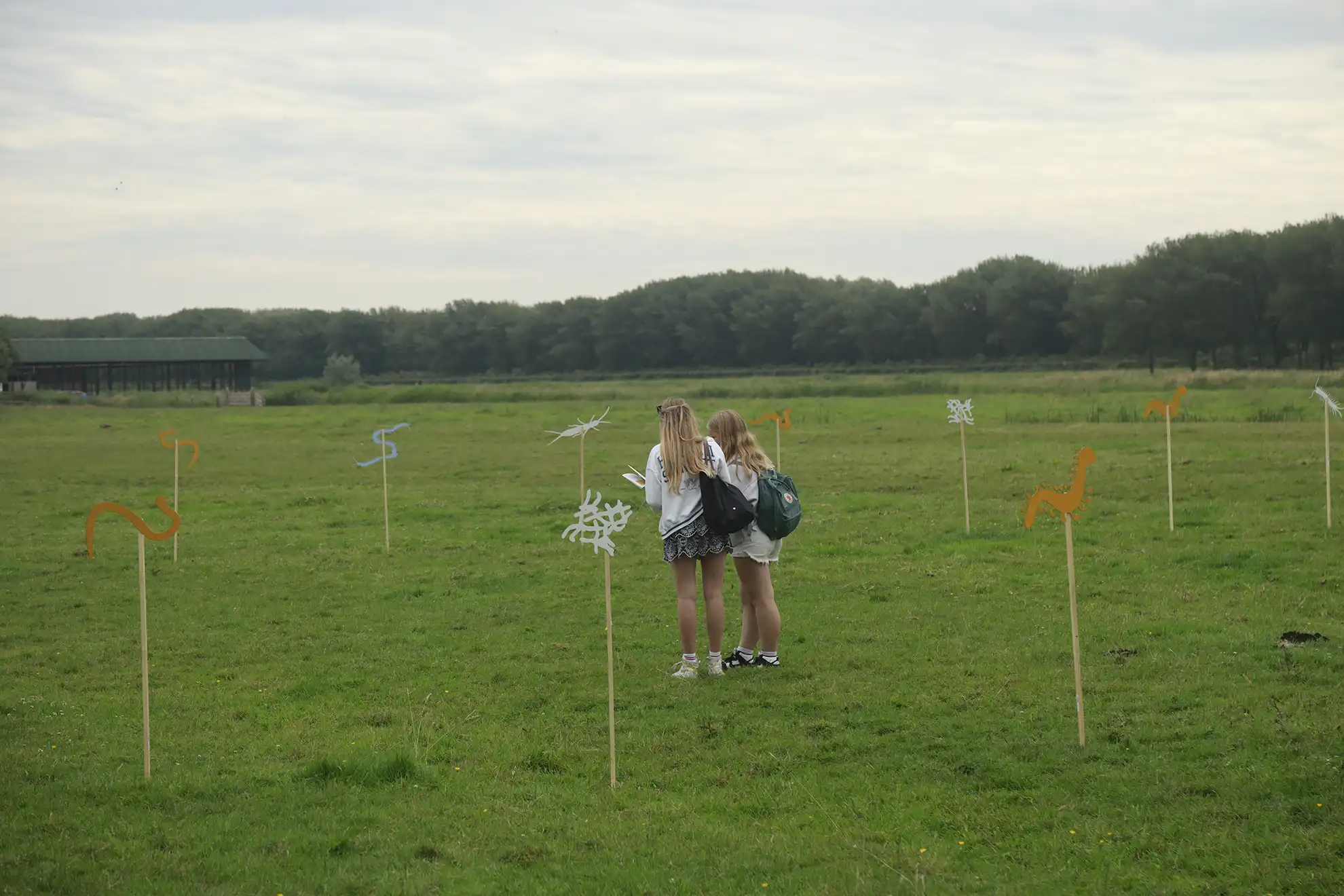
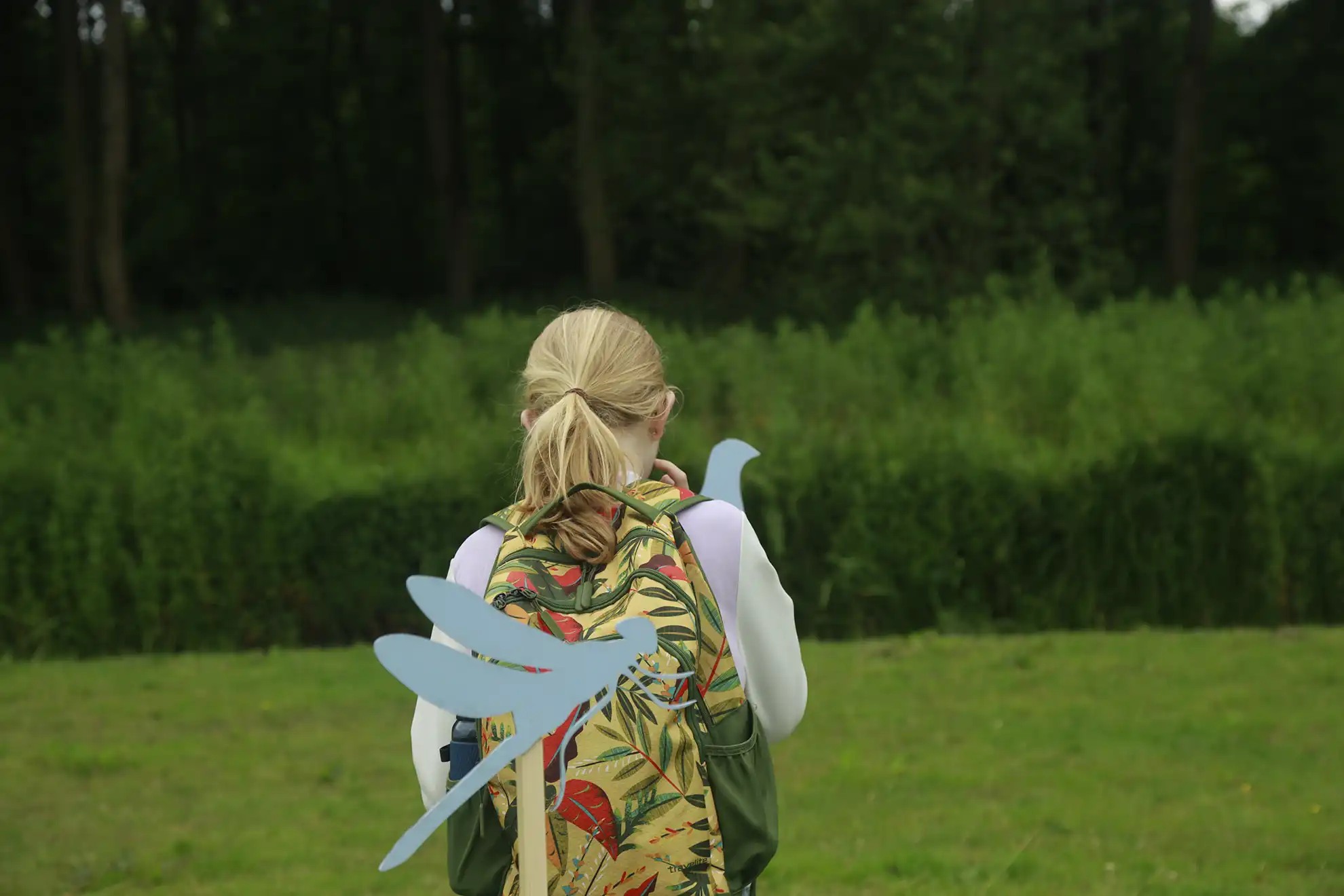
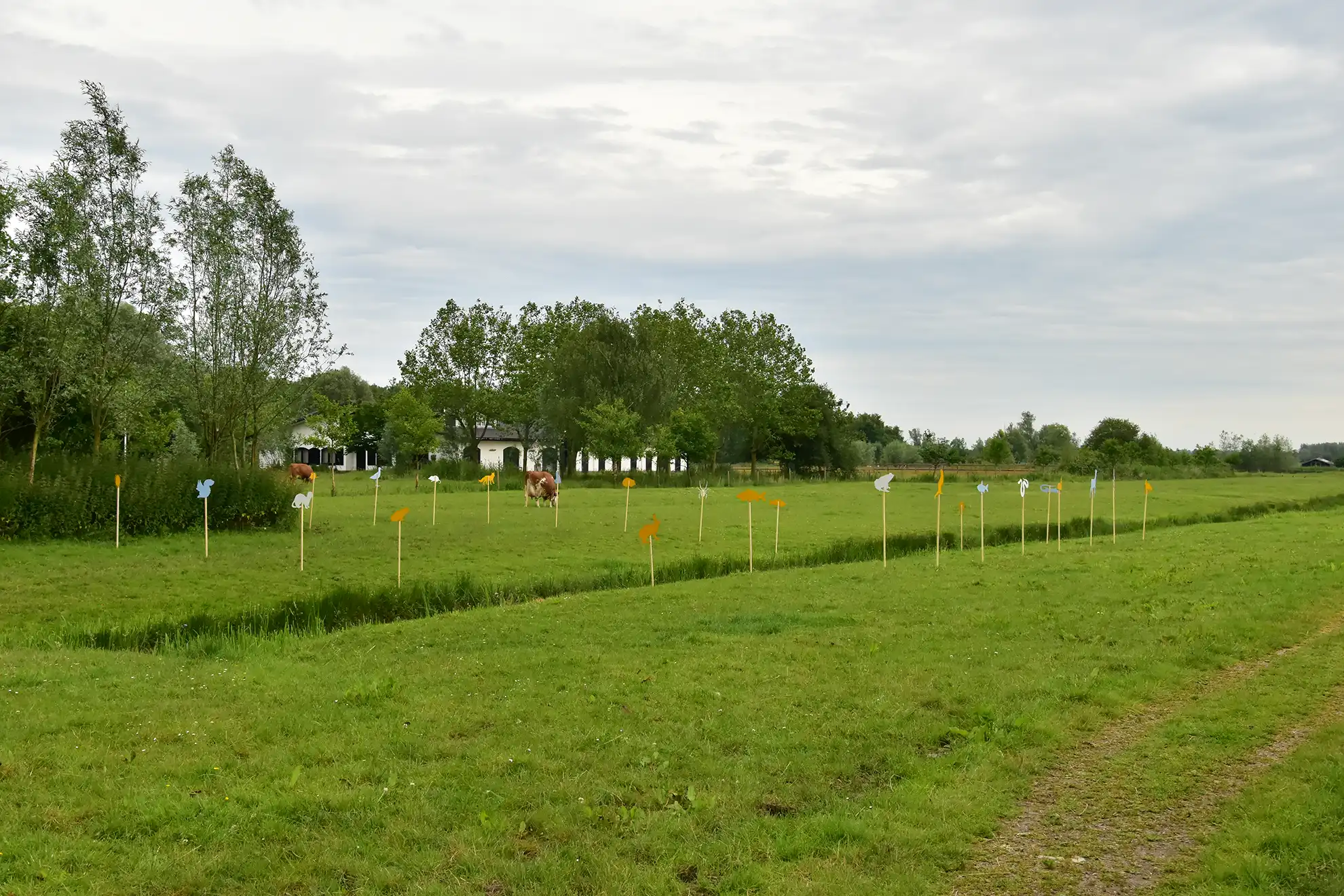
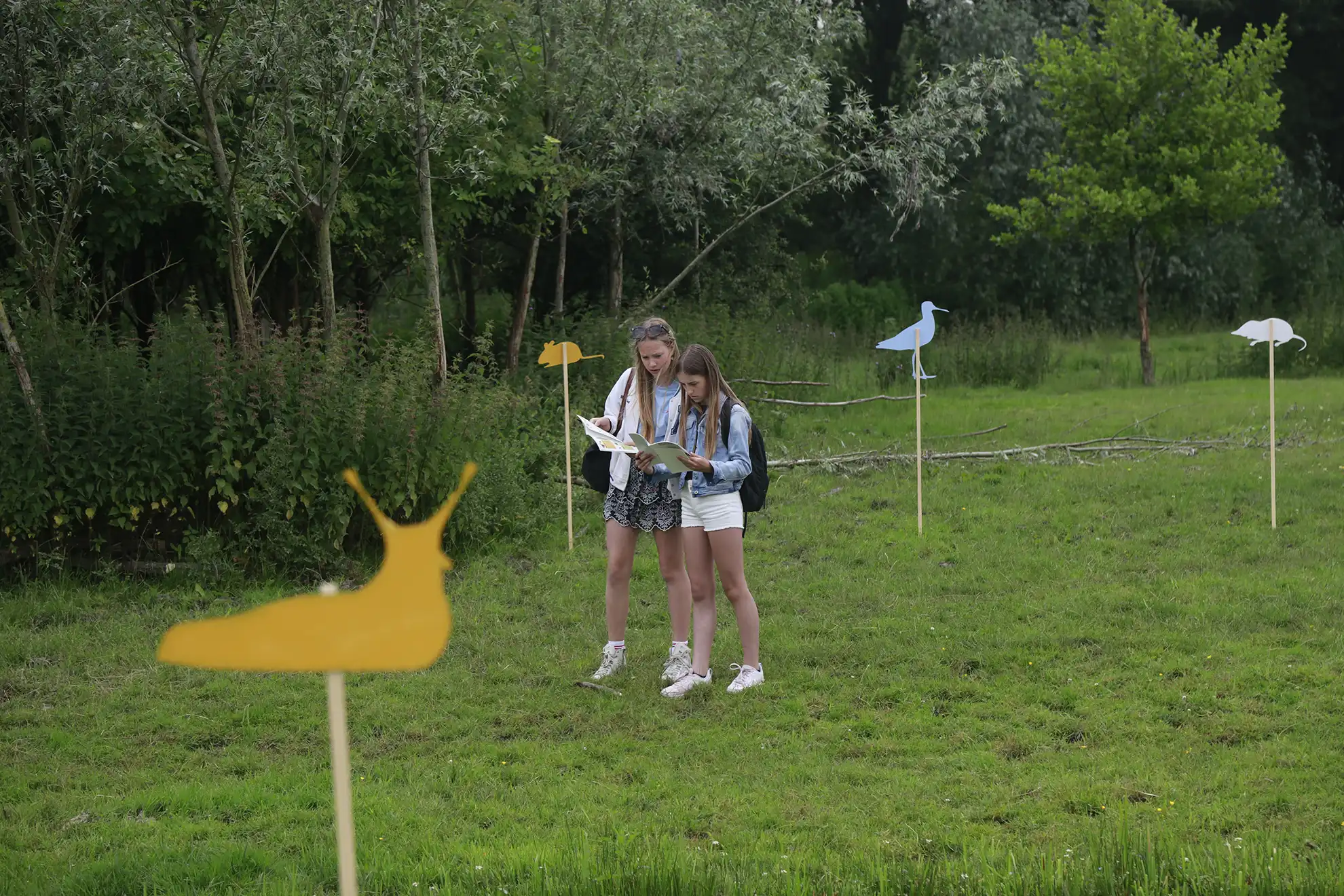
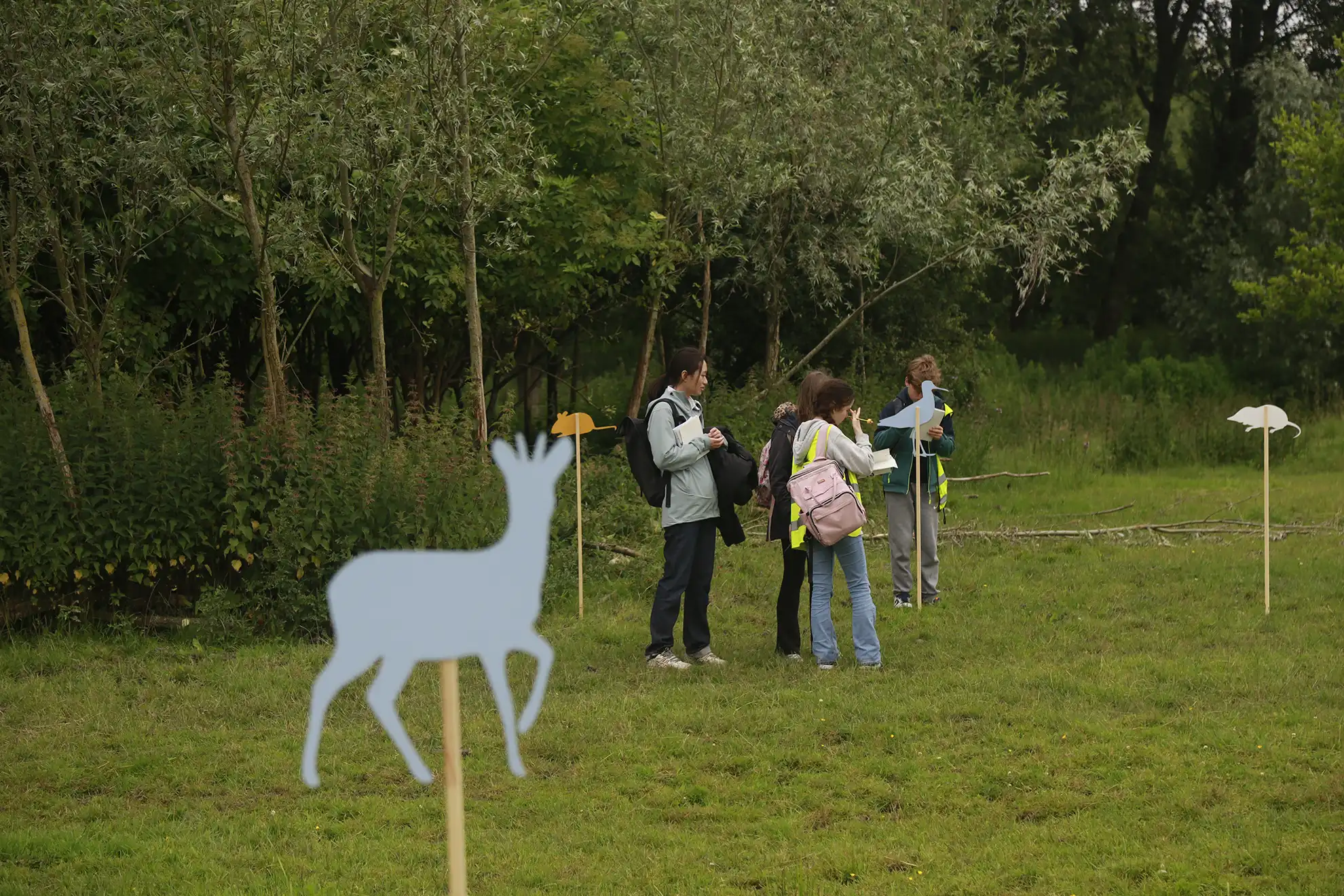
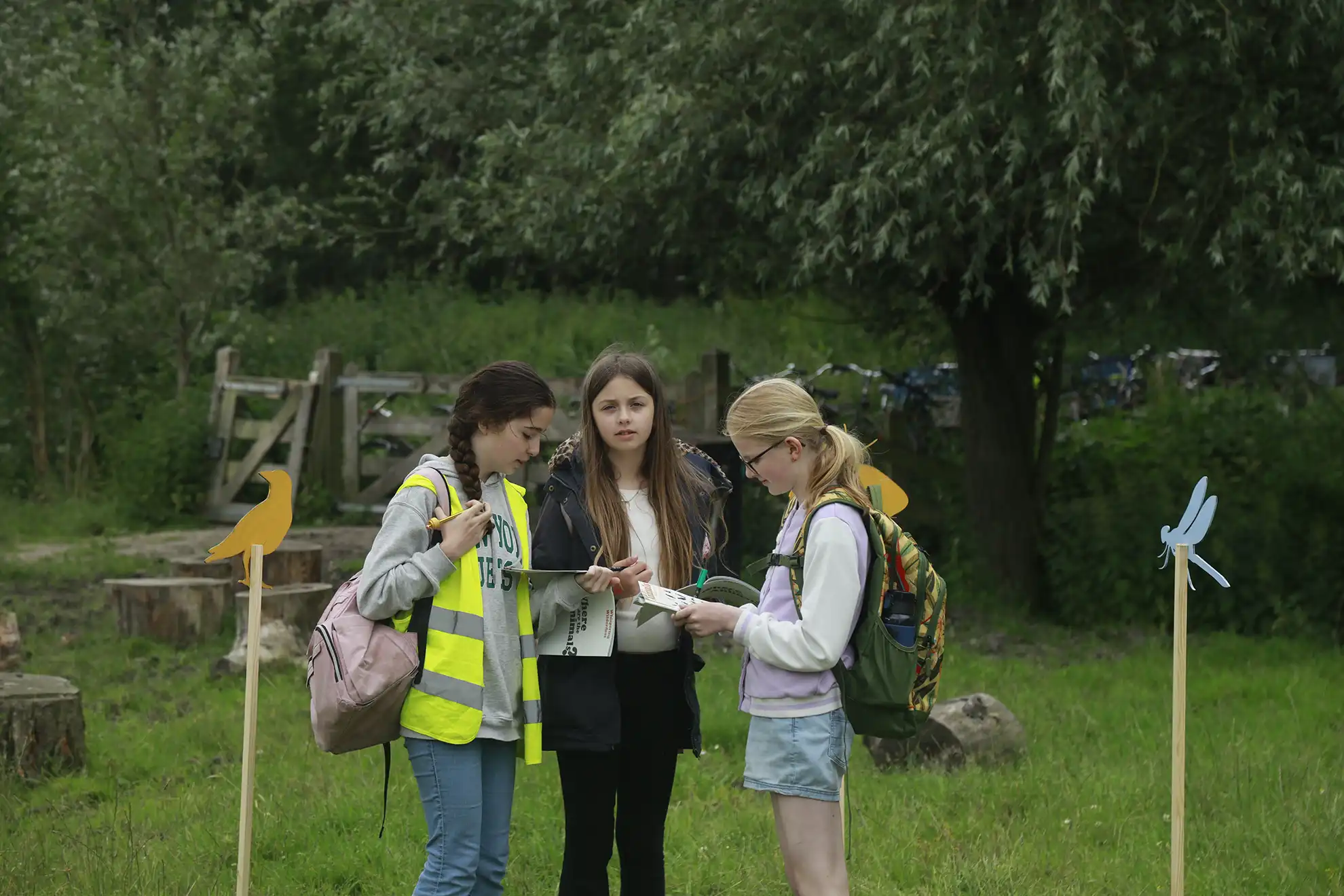
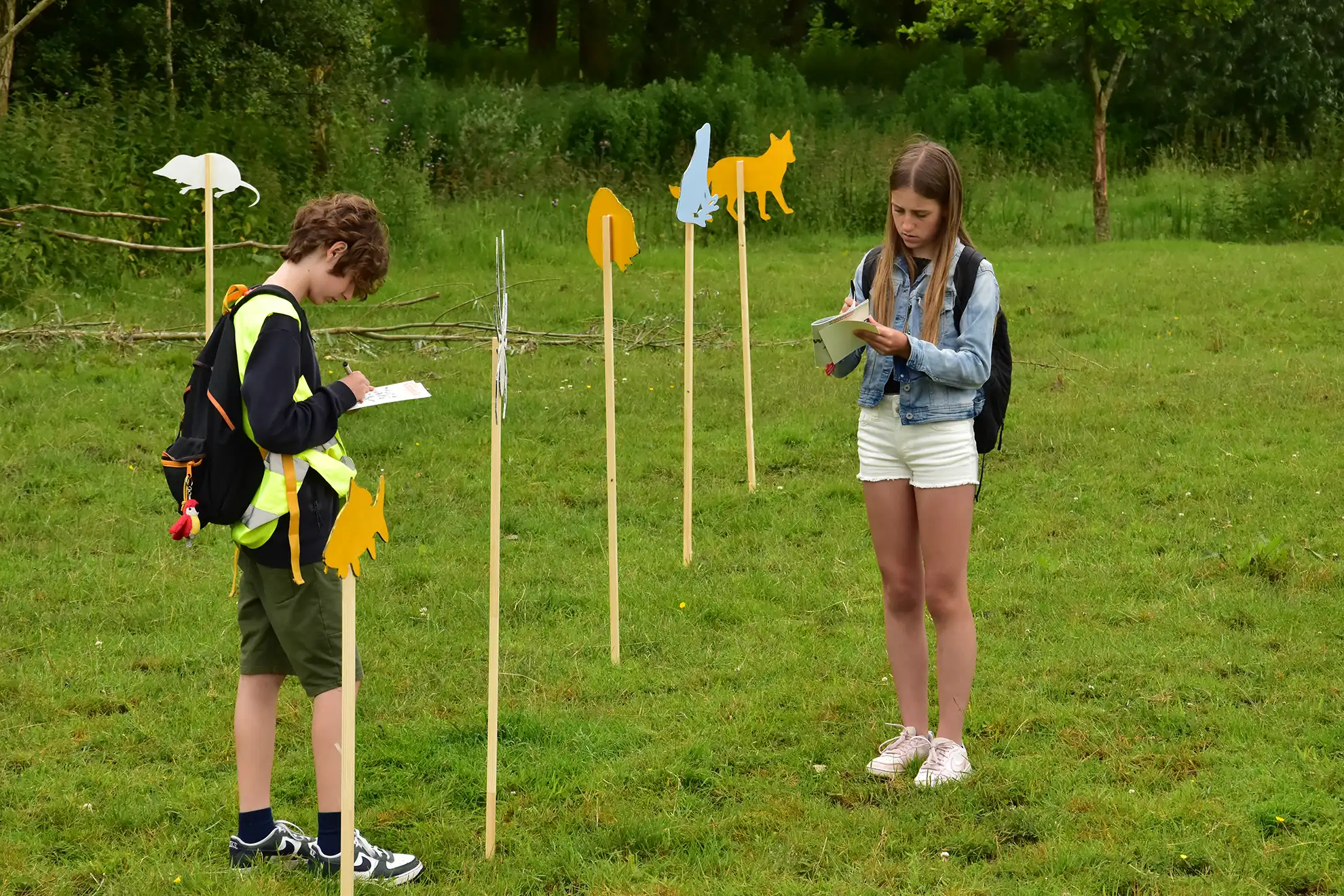
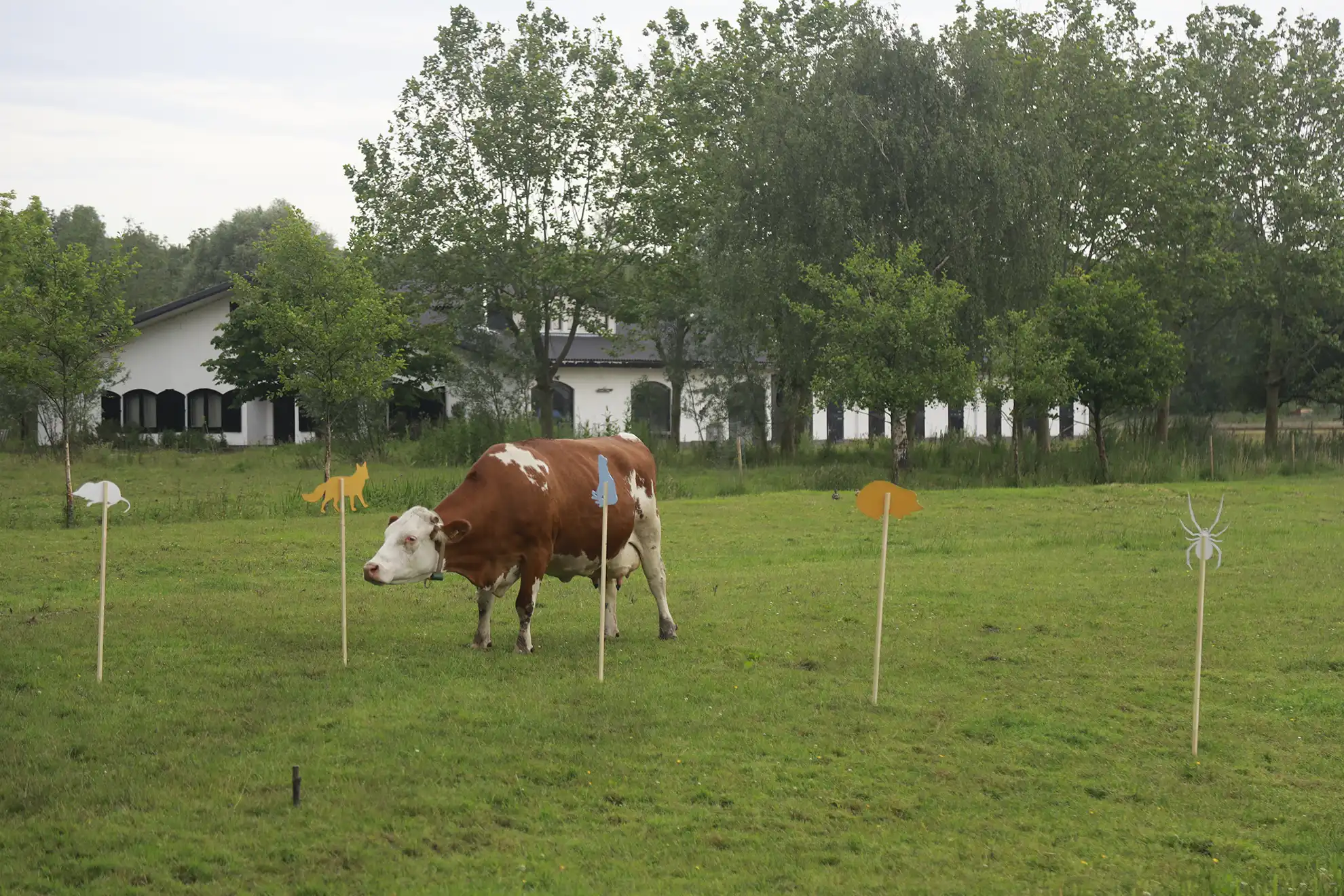
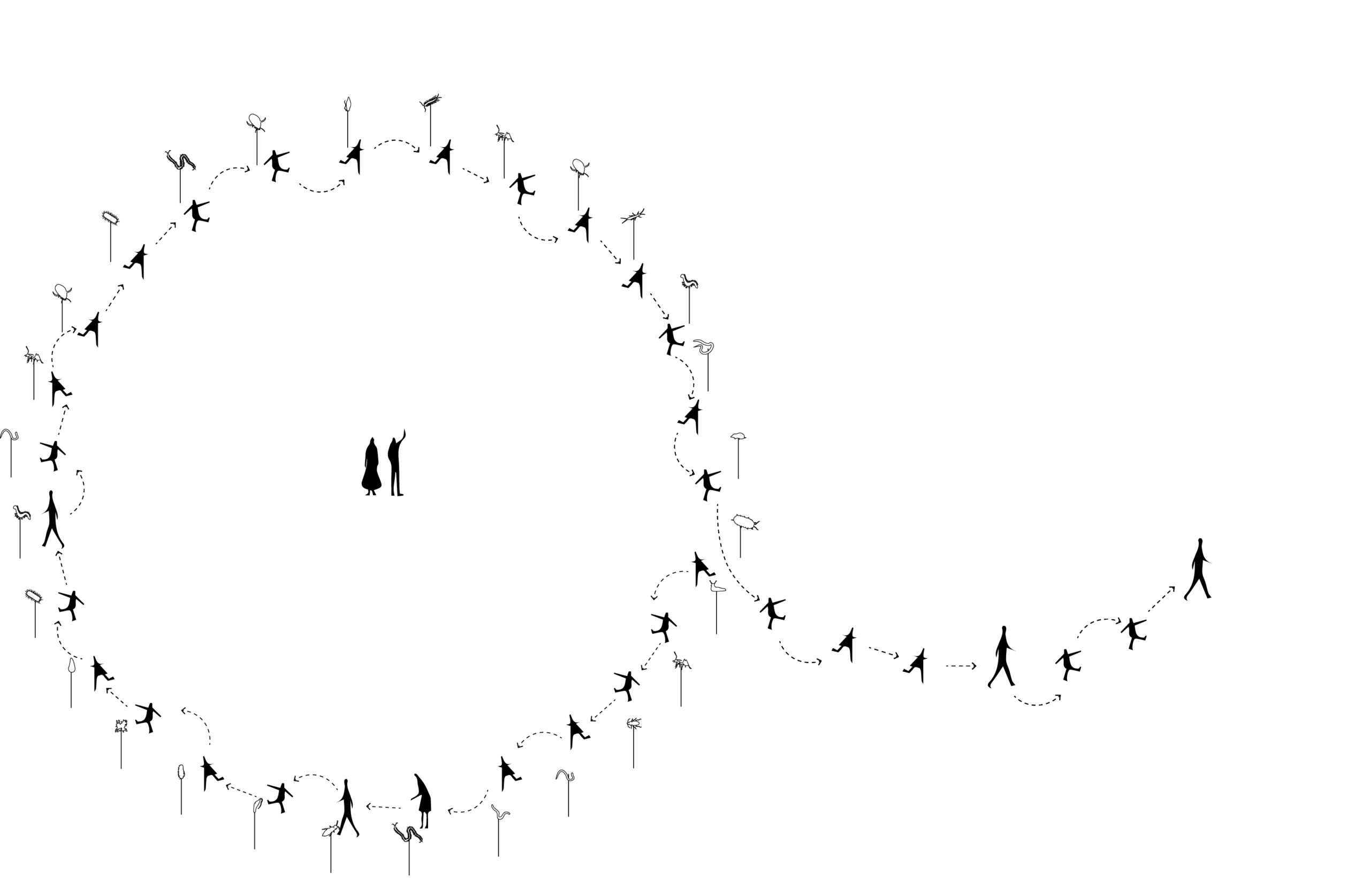
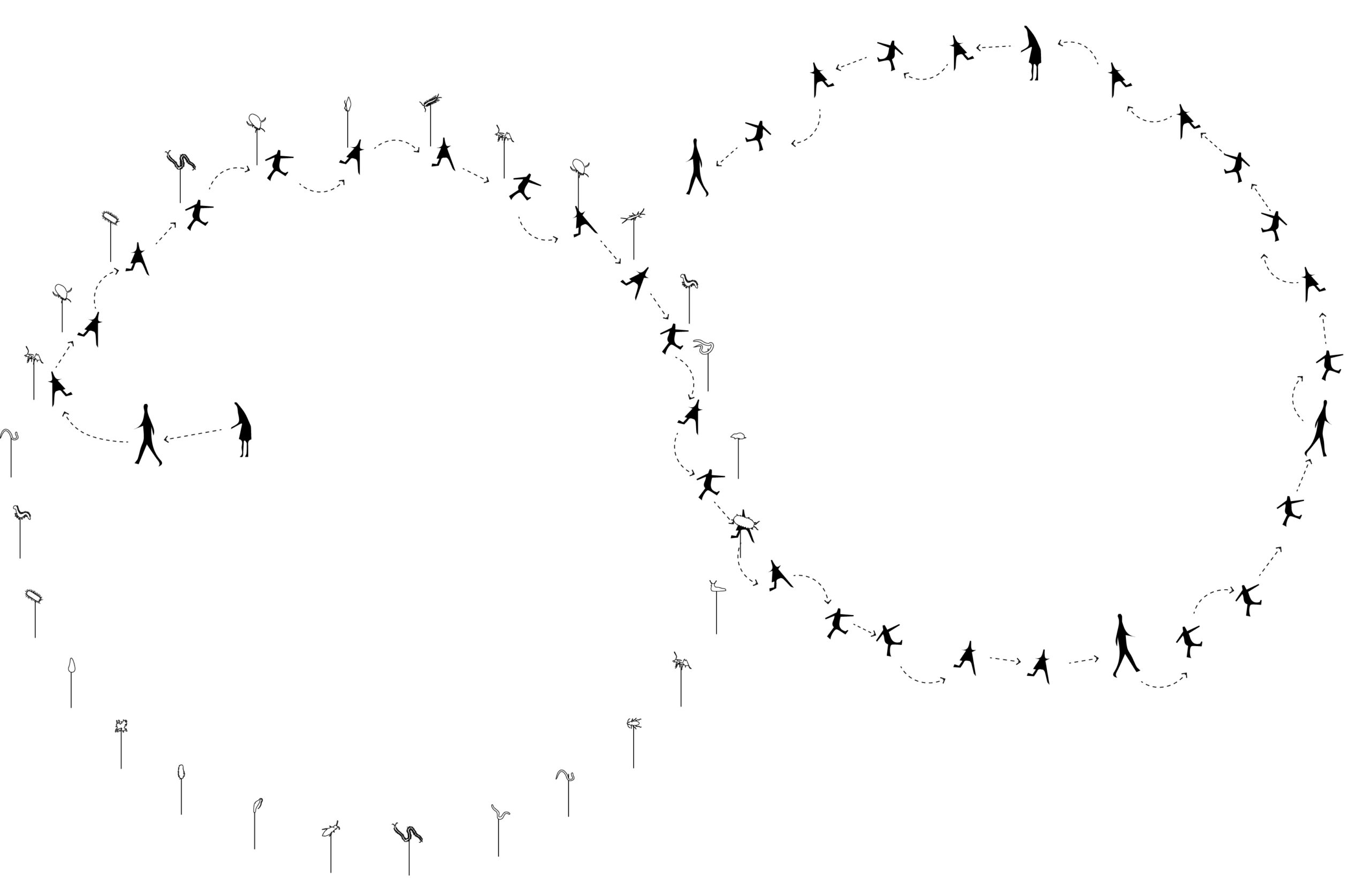
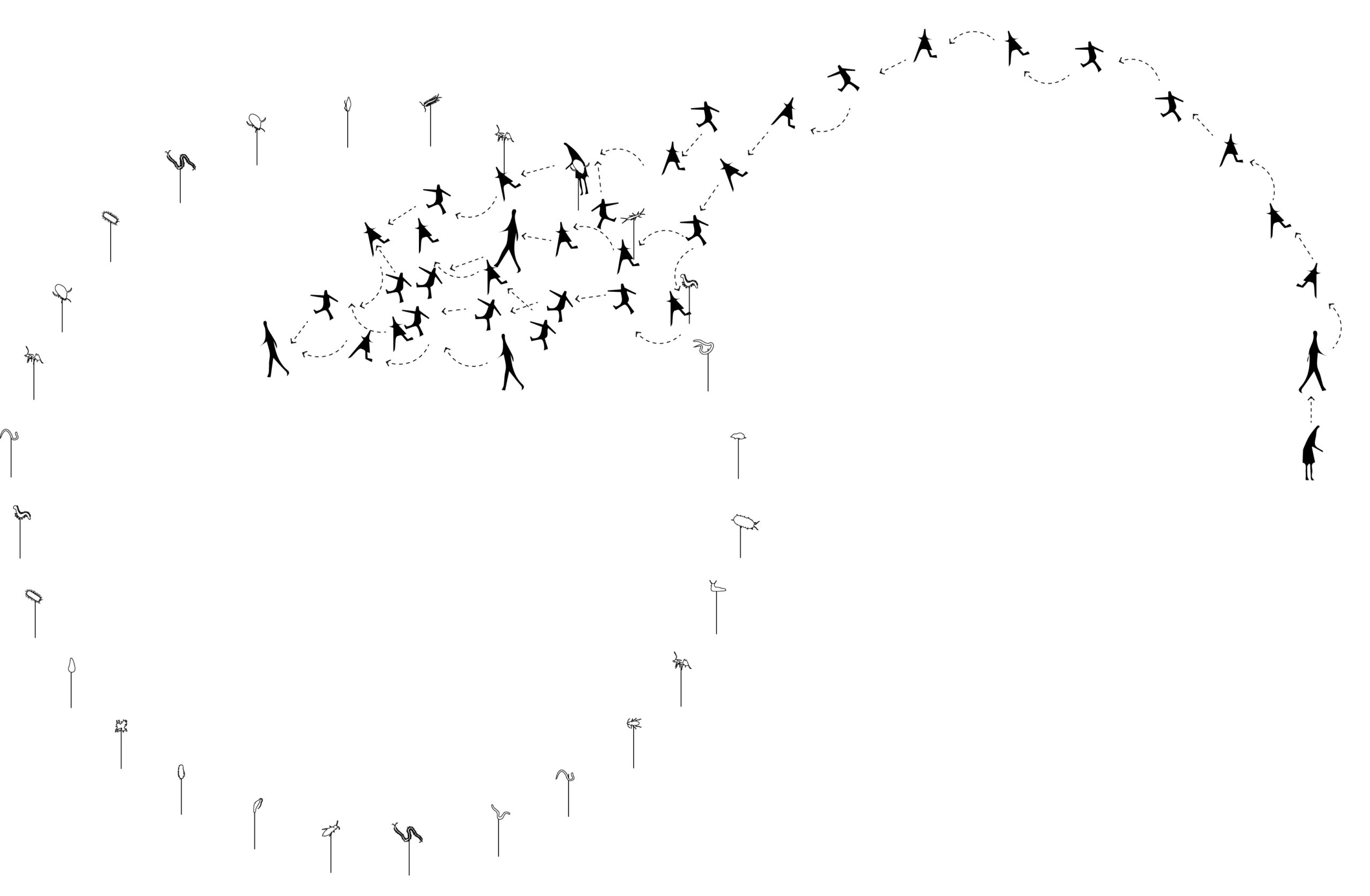
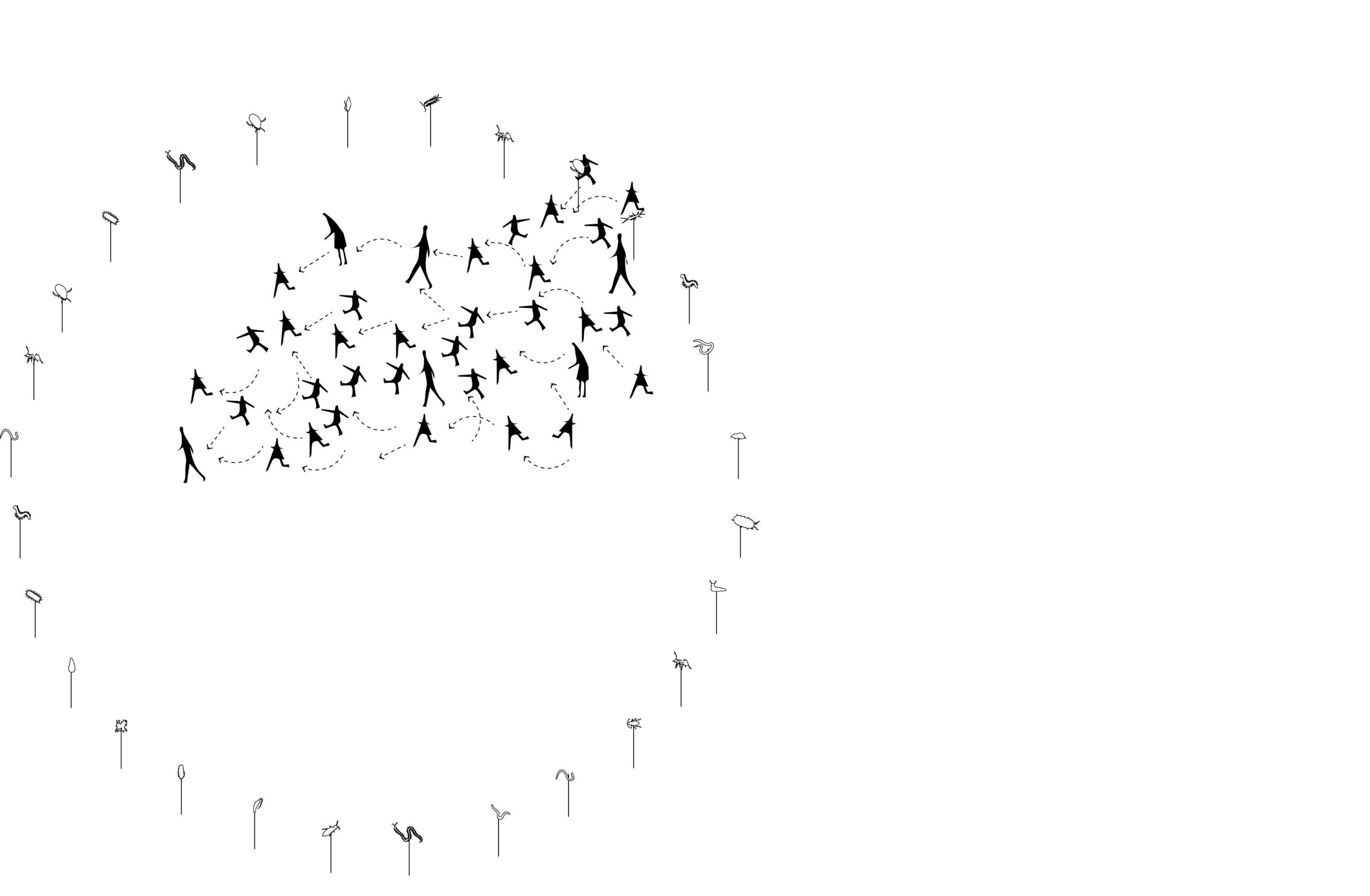
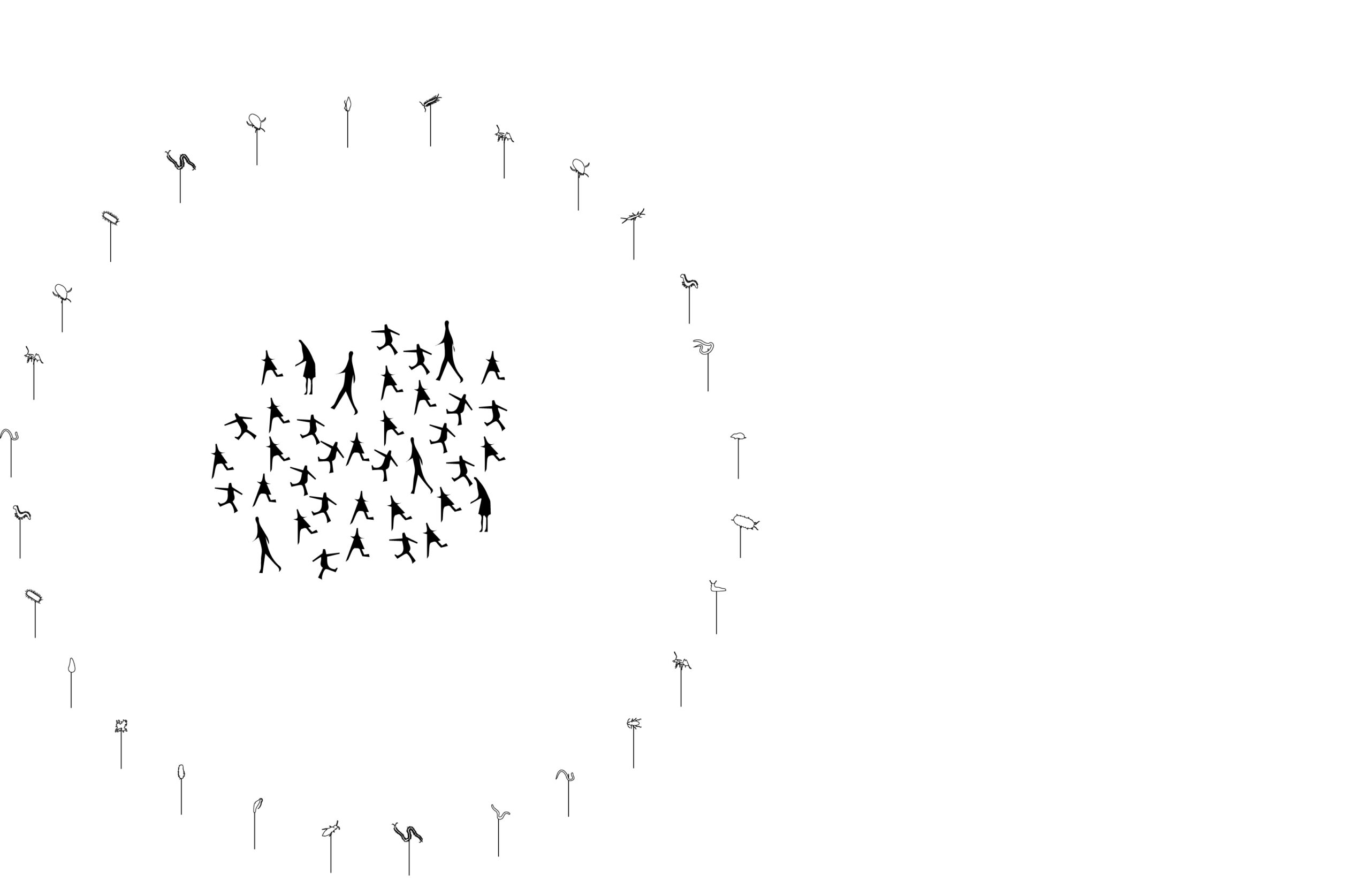
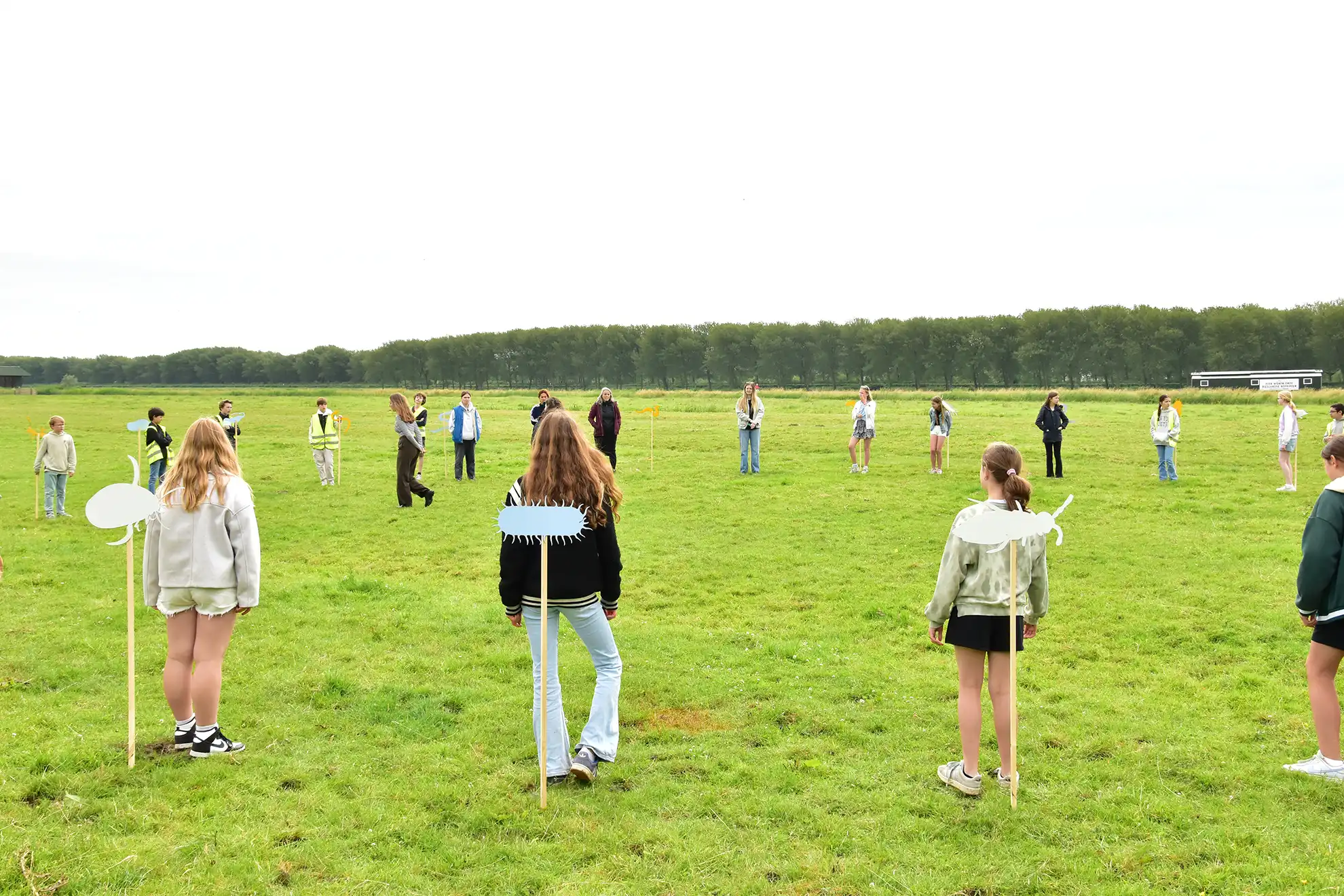
This final event, ‘Whispering Wilderness,’ focused on interactions and playful co-designed practices involving children, teachers, parents, farmers, and (in)visible living animals and organisms to envision potential soil carbon futures for the climate transition. Wild play choreographies and installations—’Between the Clouds,’ ‘On the Earth,’ and ‘Under Our Feet’ in the Polder—guided visitors through ‘The Dream’ in the Forest. The educational event encouraged children to explore various animal species through installations divided into three habitat groups—air, land, and underground animals—displayed in elemental shapes of triangle, square, and circle. Animal species were painted in one of three colors—blue, white, and yellow—to indicate their regional presence.
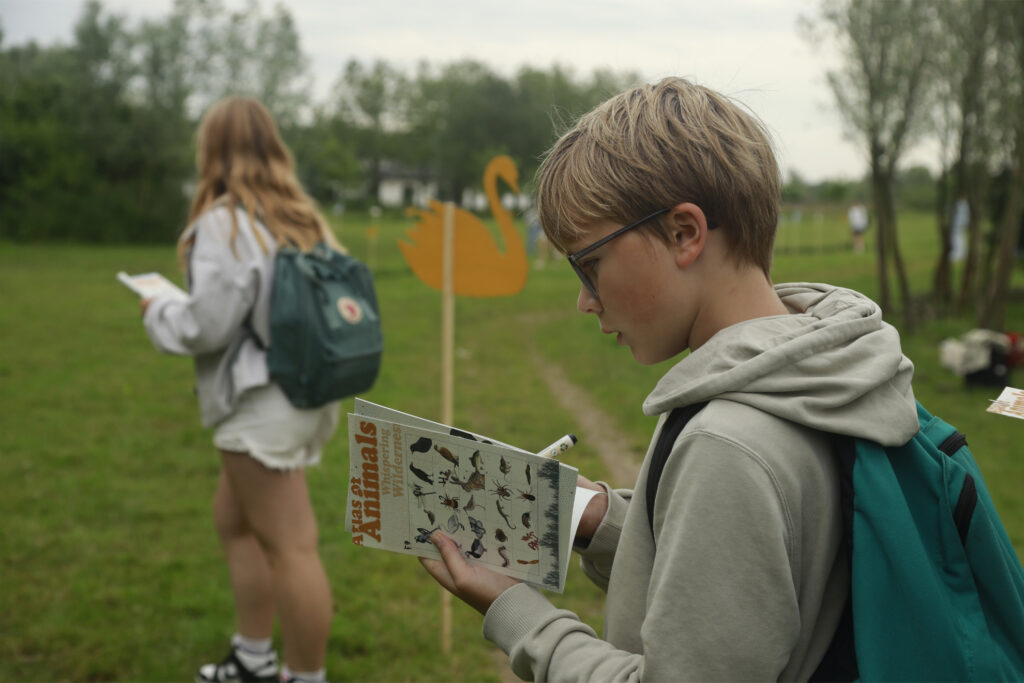
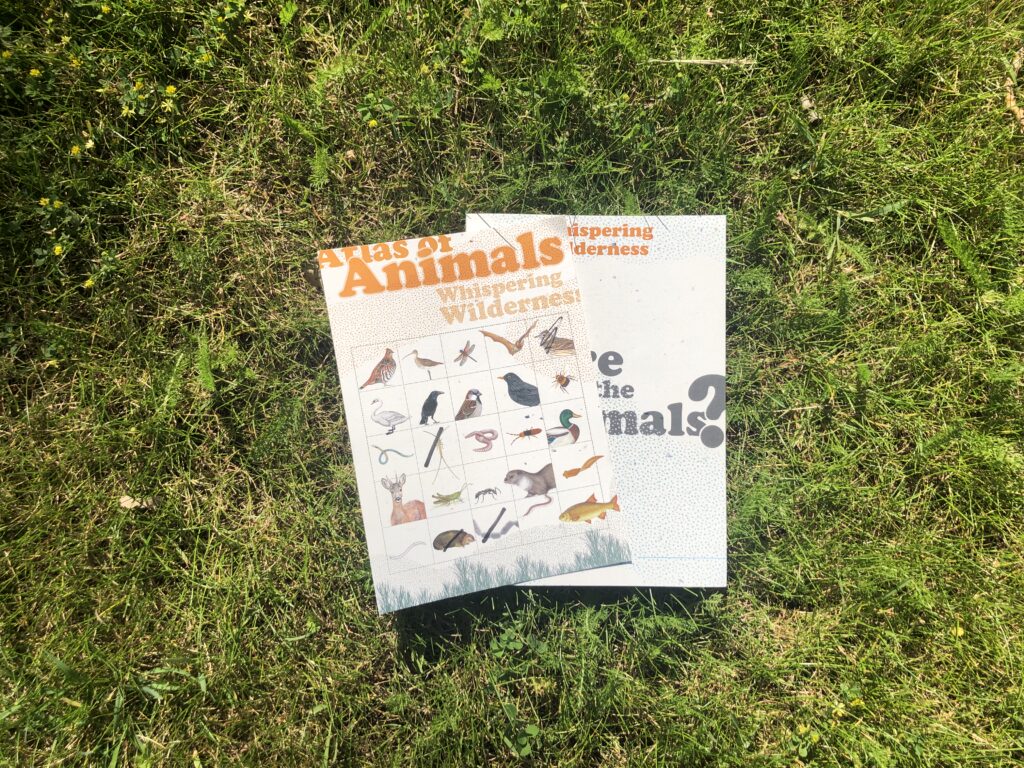
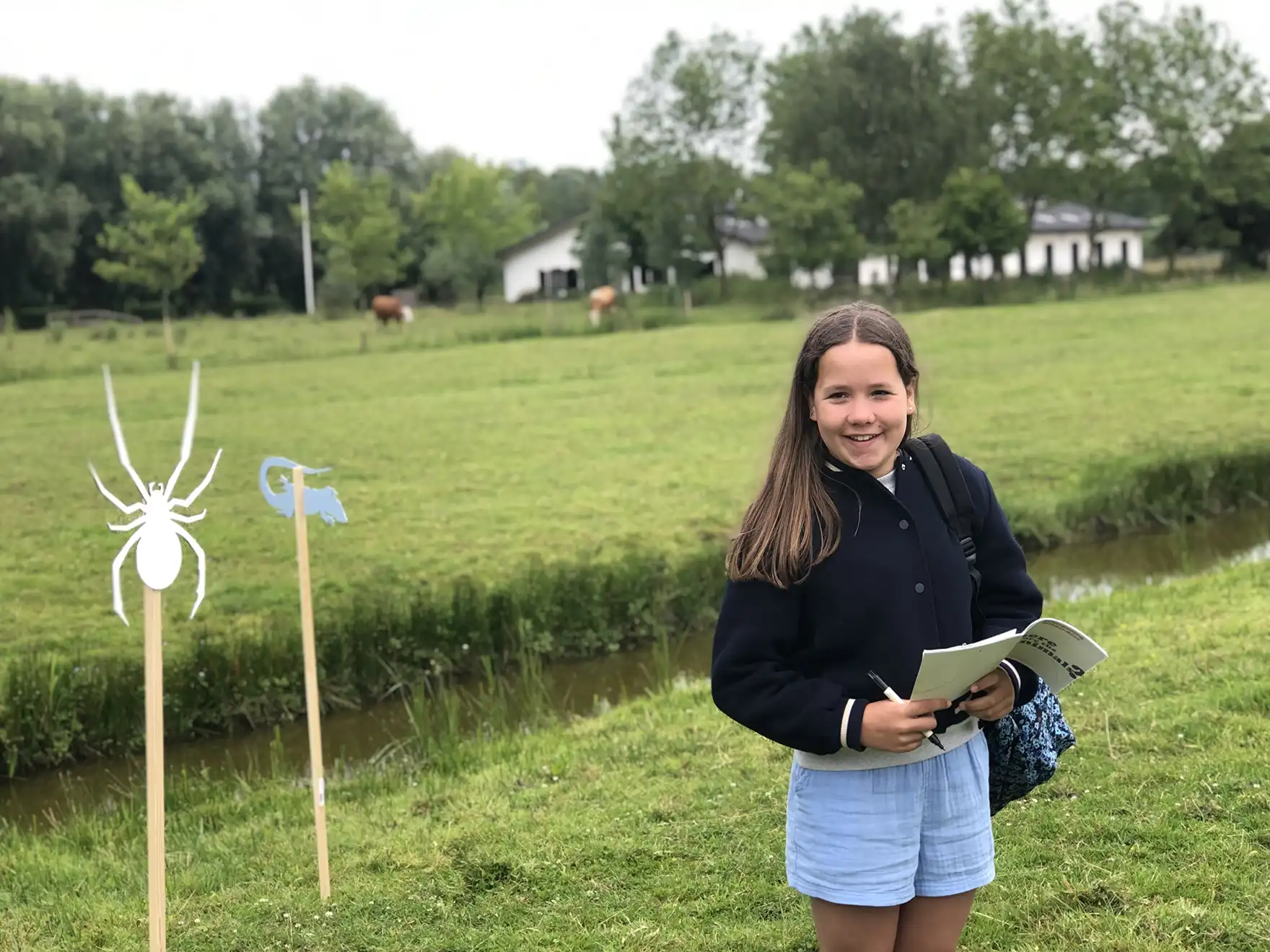
Equipped with detailed information about the animals and a bingo card, children embarked on a quest to match animal installations. This activity fostered fun, interactive learning and educated them about the impact of climate change on animal habitats, boosting their understanding of biodiversity and environmental challenges. We compiled the information into a handy speed-dial booklet, allowing children to quickly access details about animals from the past, present, and future. This resulted in the booklet titled ‘Where are the Animals?’ which features various content types: general information, educational texts about the animals supporting the installations, a bingo card, and blank pages for personal notes. The general information offered insights into animal and human emissions.
The animal data is categorized by timeframe—past, present, and future. Each child’s bingo card was unique, making each game one of a kind. The booklet weaves a story connecting animals and climate change, providing a comprehensive educational experience.
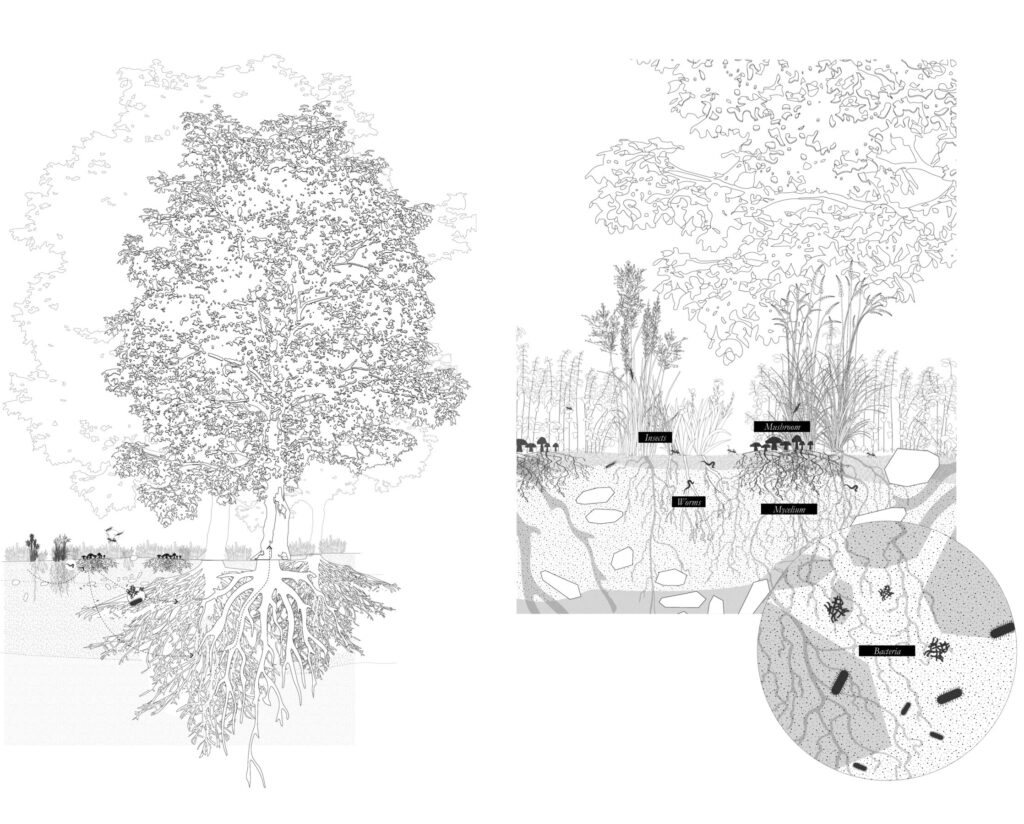
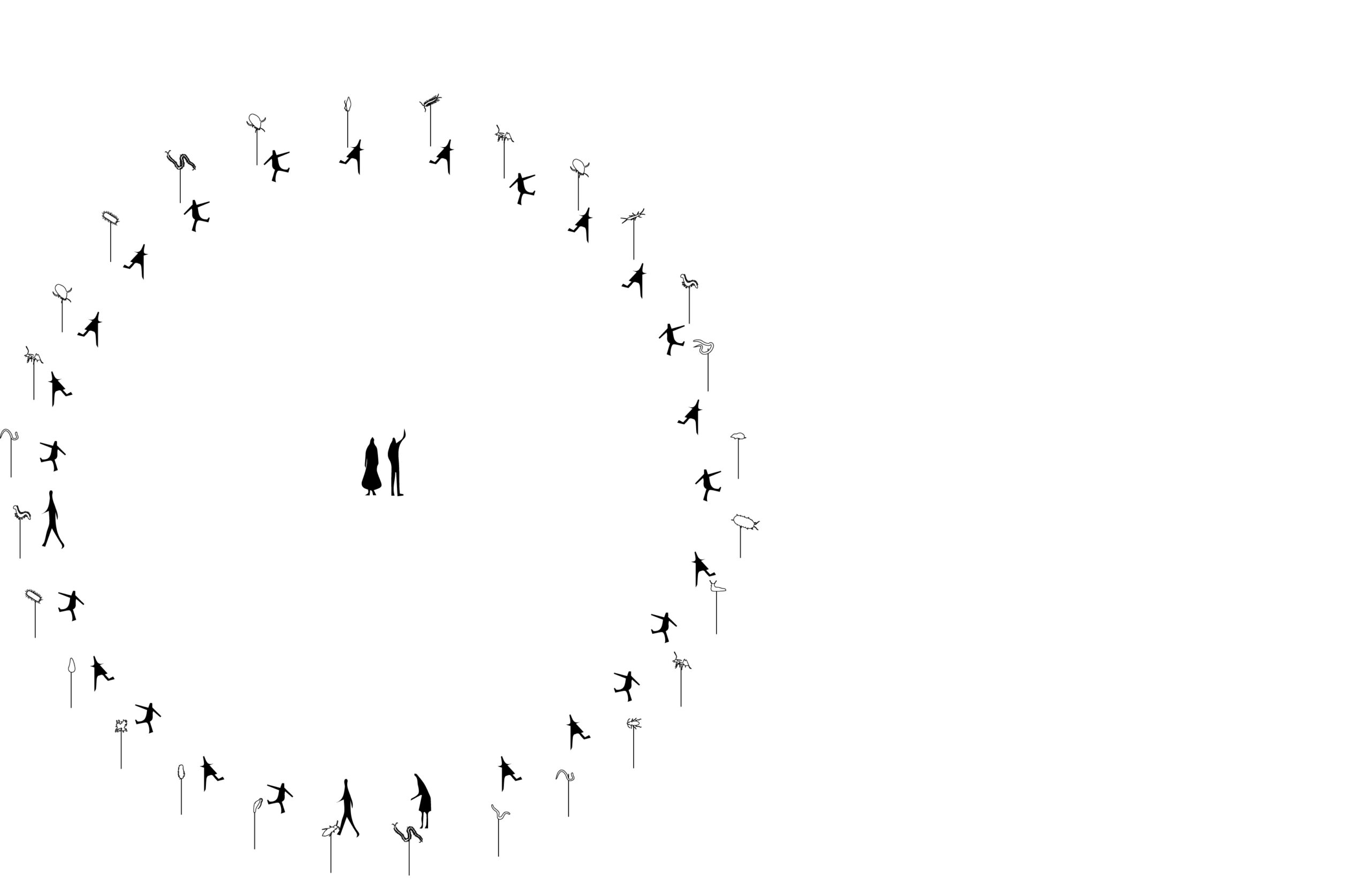
Notably, the installation ‘Under Our Feet’ encourages children to imagine and learn about what lies beneath the ground and its potential for carbon storage. The invisible world beneath our feet is rich in biodiversity. Bacteria, fungi, protozoa, nematodes, arthropods, and earthworms represent various forms of life within the soil. This biodiversity is essential for maintaining soil health, supporting plant growth, and providing ecosystem services such as nutrient cycling, carbon storage, and water filtration—crucial processes that are severely threatened by climate change and human activities.
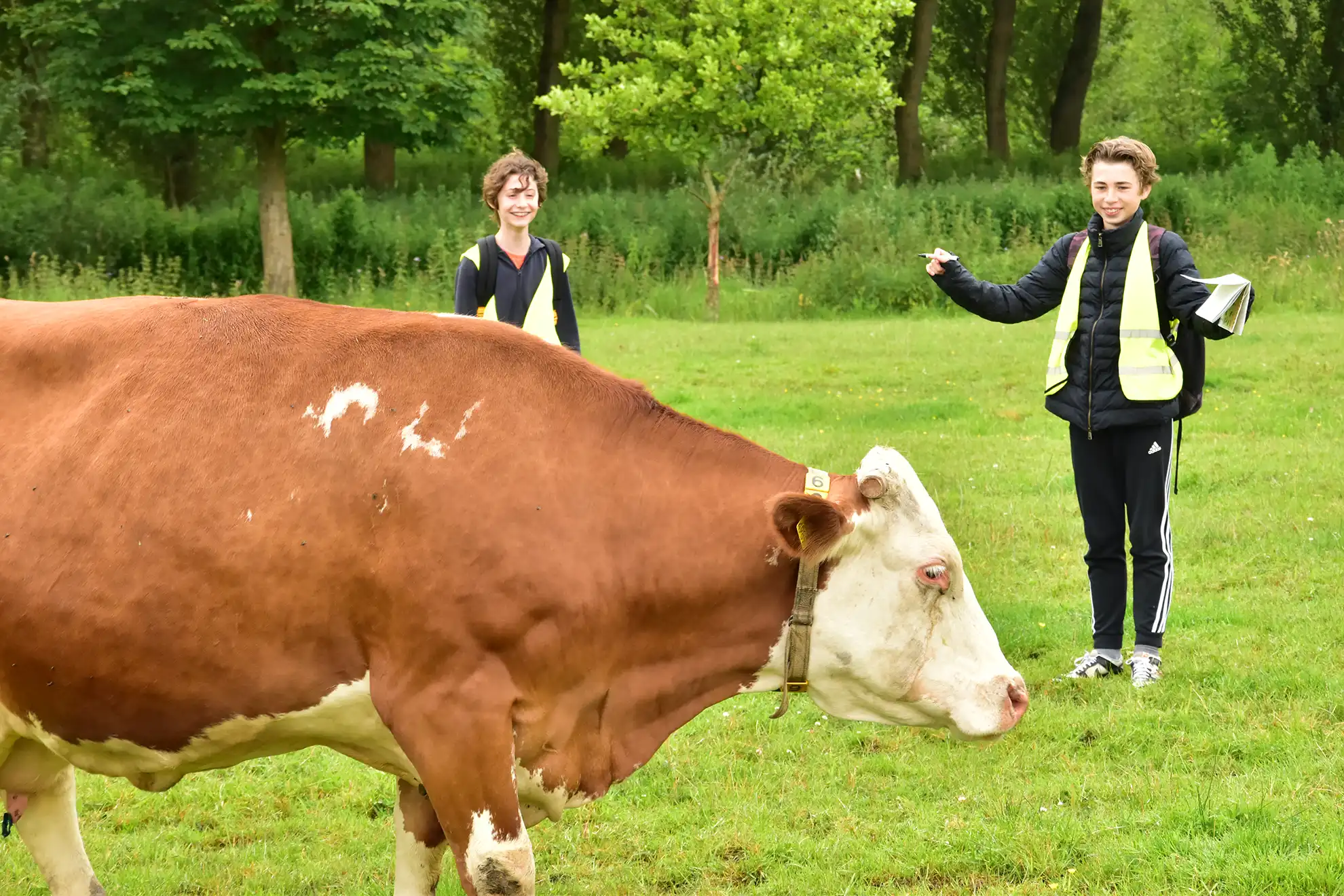
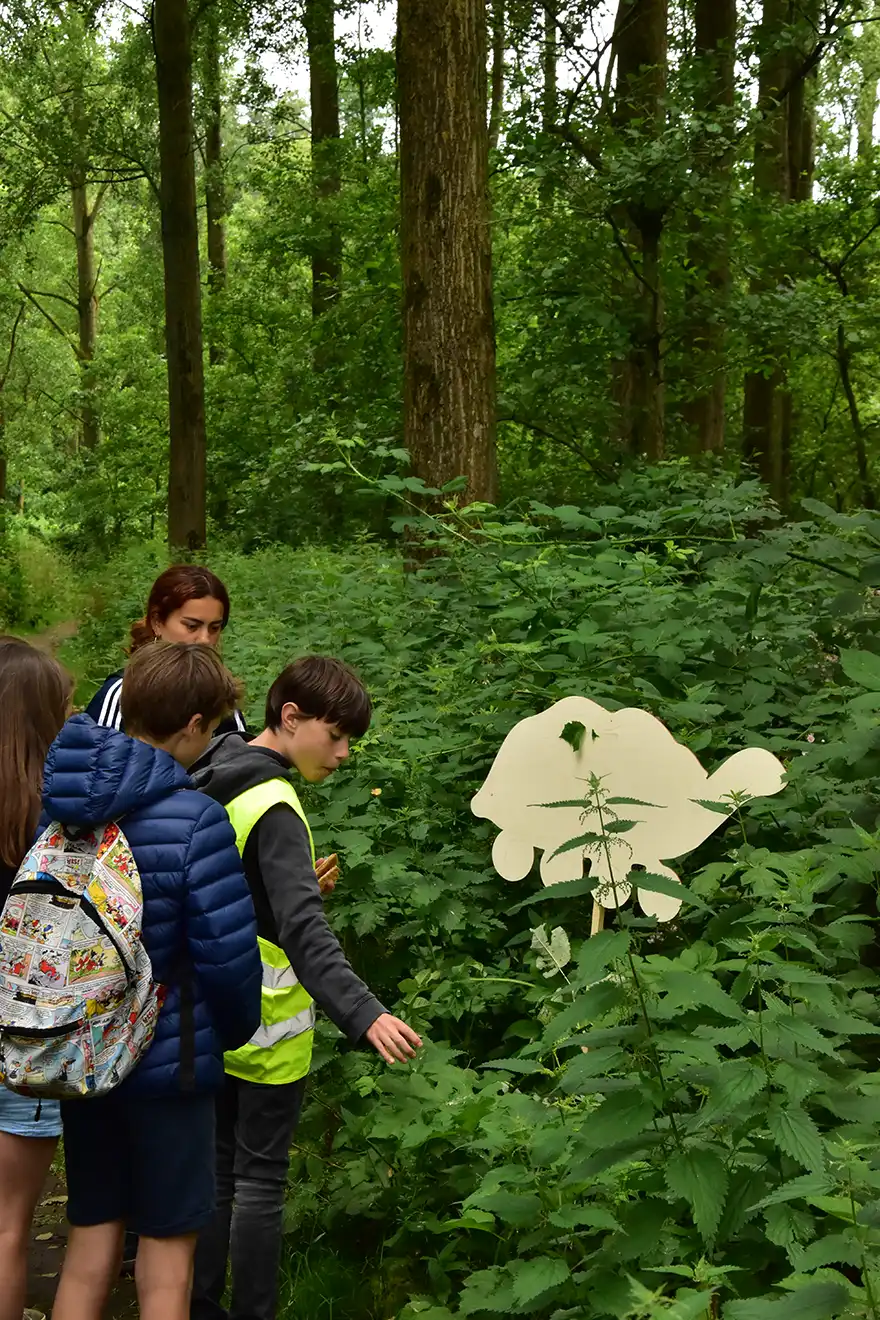
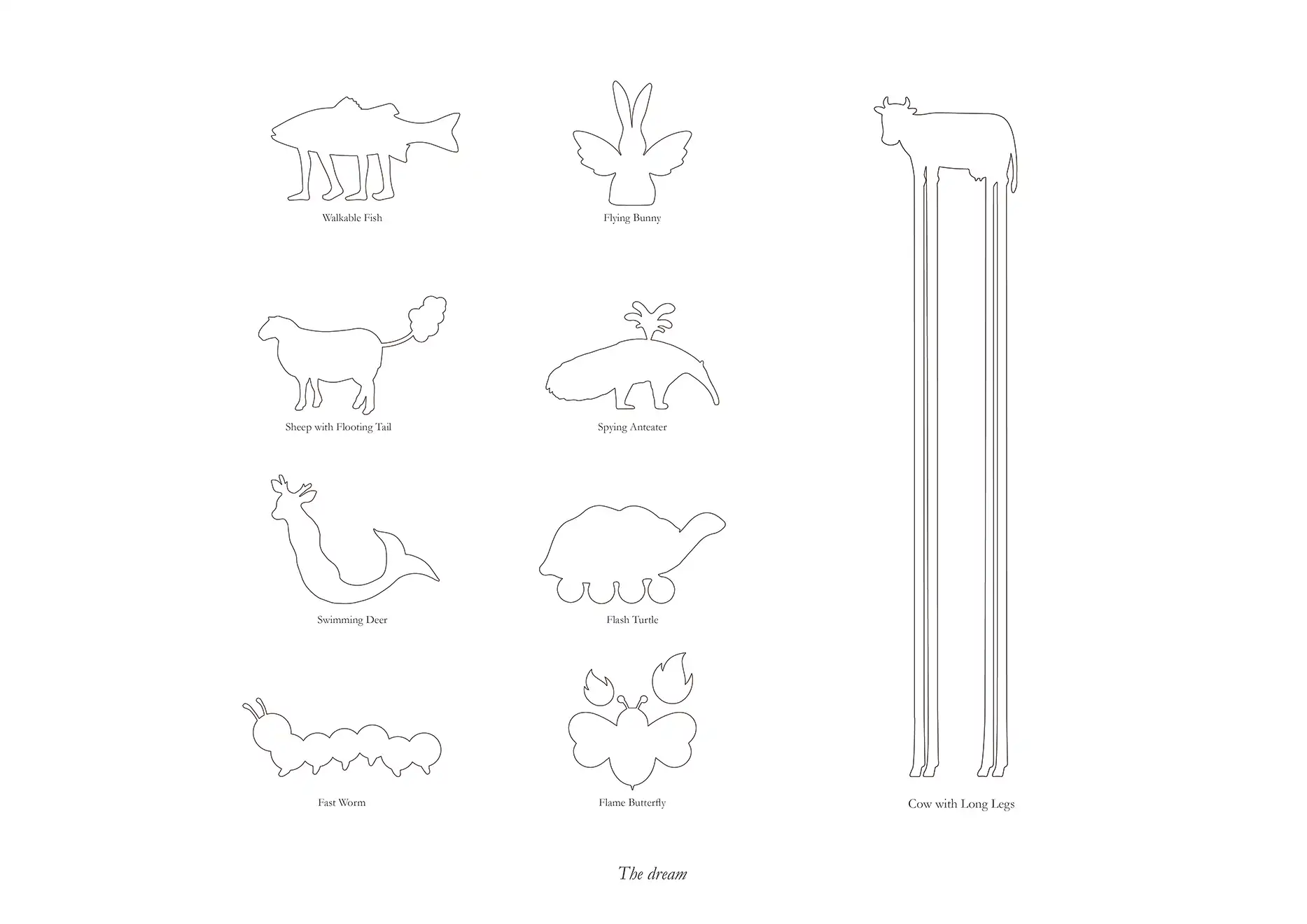
The installations in the polder led children through ‘The Dream’ in the forest, where unexpected evolutionary animals line the nearby woodland path. Inspired by Henri Rousseau’s vivid painting ‘The Dream,’ which depicts an imaginary jungle, our dream in the forest illustrated animal evolution as envisioned by children during the second workshop: fish with legs for dry periods, cows that self-store CO2 emissions to reduce climate impact, and rabbits transforming into butterflies to escape and become pollinators.
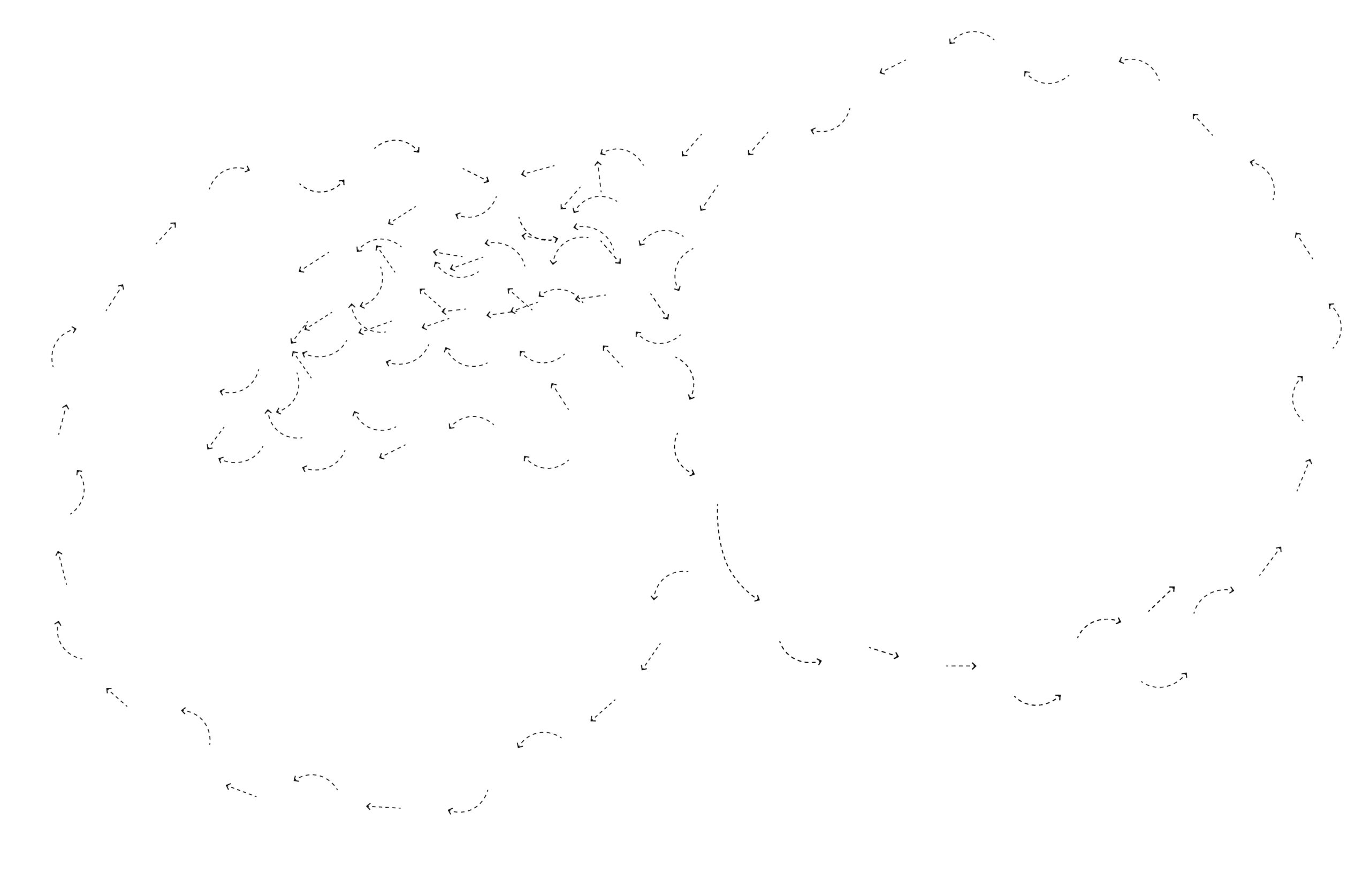
The workshop concluded with a playful dance to ‘In the Jungle,’ where participants mimicked animal movements, creating wild choreography. Play becomes a dance in the landscape.